


fourth world
Carlos Ortúzar
Metal sculpture, 1972
The Fourth World, by Chilean Carlos Ortúzar, was one of the sculptural pieces that were installed in the building erected for UNCTAD III and in the later Gabriela Mistral Metropolitan Cultural Center. However, it is also part of the twenty works that disappeared in 1973 after the Military Coup.
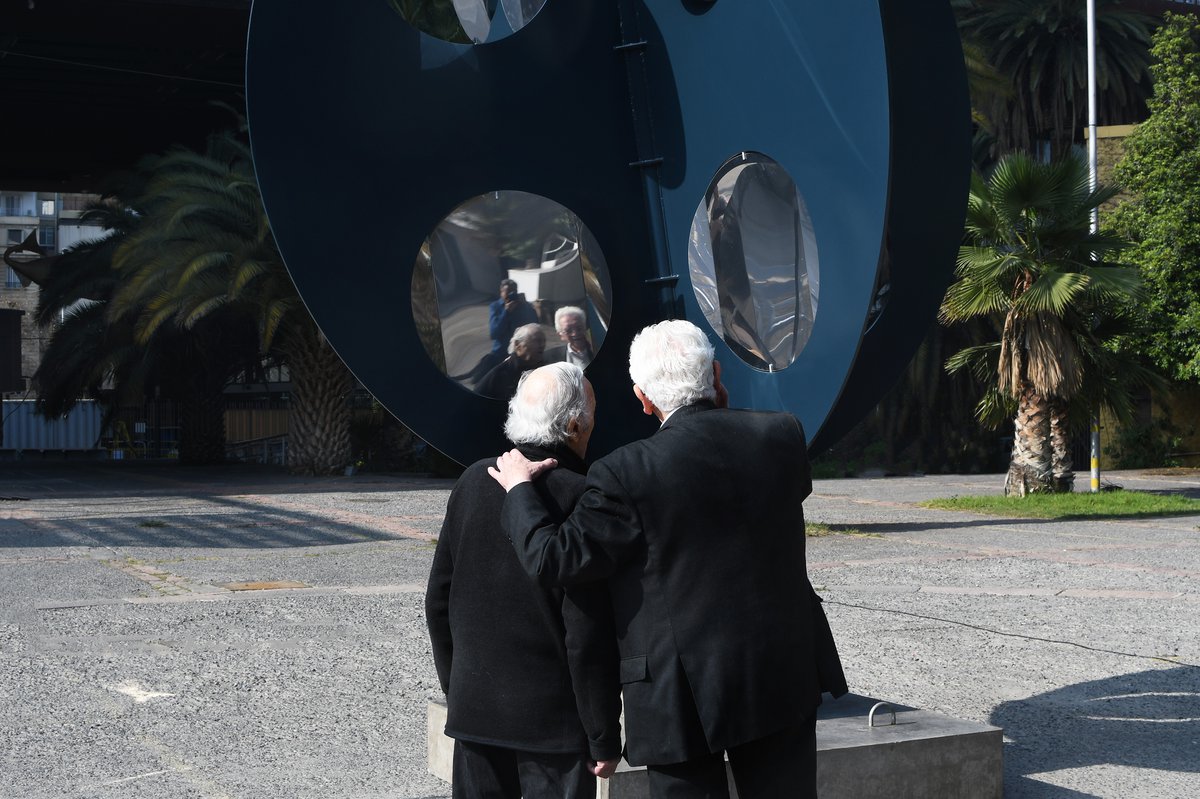
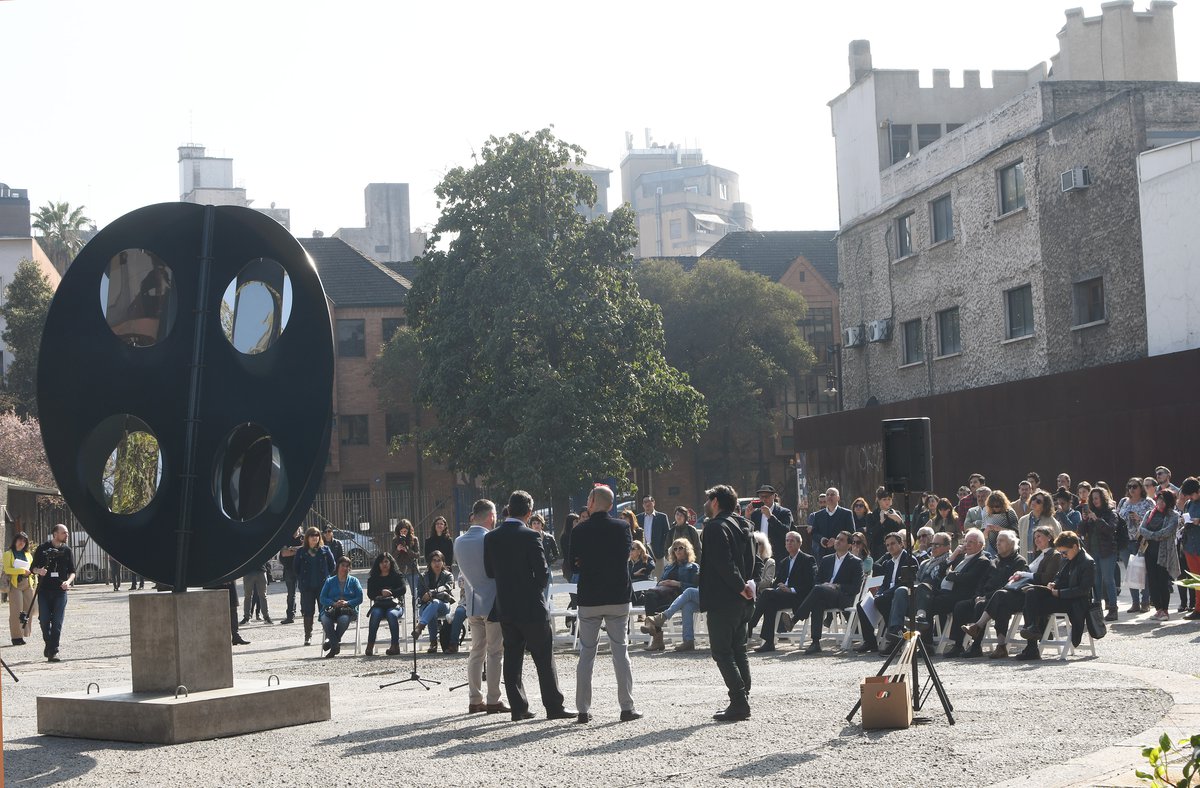
This metal sculpture was only in place for one year and in 2019 it returned to its original location in front of the Villavicencio Tower, thanks to the management of the Media Arts Biennial that contacted Ortúzar's family to request authorization.
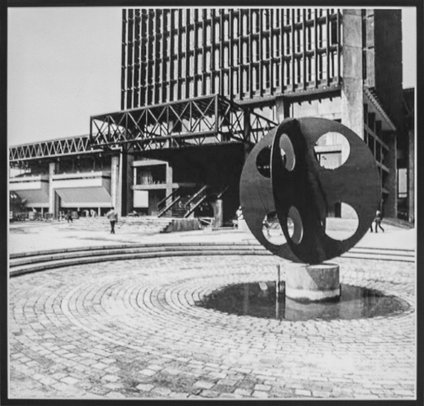
original location
Then they called the Jemo workshop to invite them to participate in the reconstruction, and finally to GAM and the Ministry of National Assets to receive the work.
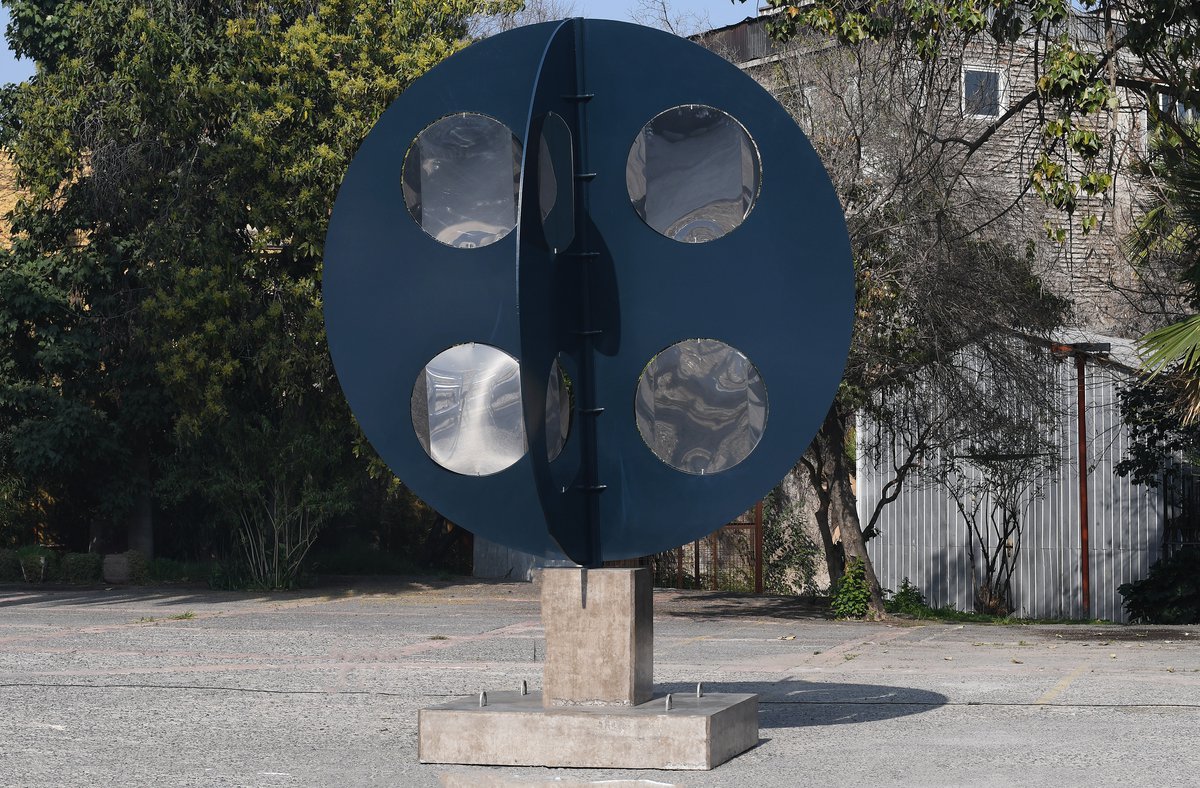
The piece is made of steel painted with acrylic enamel, is more than three meters in diameter and weighs one and a half tons. It is built on a concrete base and also has mobile aluminum inner circles. The water fountain of the original sculpture was not reconstructed, but its construction allows mobility until the use of the Villavicencio building is defined.
The work, installed in 1972, was a warning against the distinction between the “first, second and third world”, a division that expanded the effects of the industrial revolution on a global scale and separated the world into different social classes, while the concept of “fourth world” was coined to designate the most marginalized portion that lives in conditions of lack of protection, social risk and even the indigenous peoples affected by globalization.
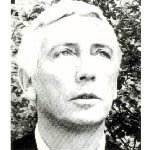
Carlos Ortúzar
Chile (1935 - 1985)
Artist
Ortúzar was one of the most prominent artists to introduce a social conception of art, which was accessible to everyone in public spaces and was integrated with architecture.
At the beginning of his artistic career, his work was linked to a language closer to material painting with works that had landscape, local myths, pre-Columbian and archeology as their main topics. Later, he ventured and experimented with new technologies and industrial materials. He also added light and movement to his works, with moving parts activated by environmental changes or directly driven by motors.