


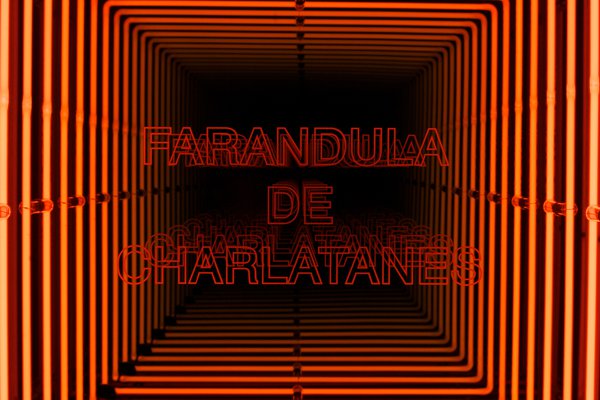
Within the framework of the 17 Santiago Media Arts Biennial, Hiperrealidades, Iván Navarro's exhibition brings together sculptures, objects, video clips and performances by the renowned Chilean artist. An exhibition that revisits the relationship between underground art and music in Chile during the 80s, understood as political resistance and a space for collaborative creation.
Almost in unison with the National Protest Days that began on May 11, 1983 as civil demonstrations against the Pinochet dictatorship, children of exiles and young people from different disciplines and socioeconomic strata created “new wave” parties in secret. Artistic encounters where music, dance, theater, performance, fashion and visual arts intersect through self-management. Well-known are spaces such as El Trolley (1983-1988) and the international garage Matucana 19 (1985-1991), which, promoted by Pablo Lavín and the Rosa Brothers and Jordi Lloret respectively, open these locations to neighbors, cogoteros, transvestites, students, artists and anyone who would like to contribute to improving the climate with their artistic knowledge without exclusion.
From there, a self-taught generation emerges that shares its instruments, video cameras, and learns about lighting, sound, graphics, and theatrical design. Organize communal pots, and work hard to put up works and concerts that finance their next steps with a sense of belonging.
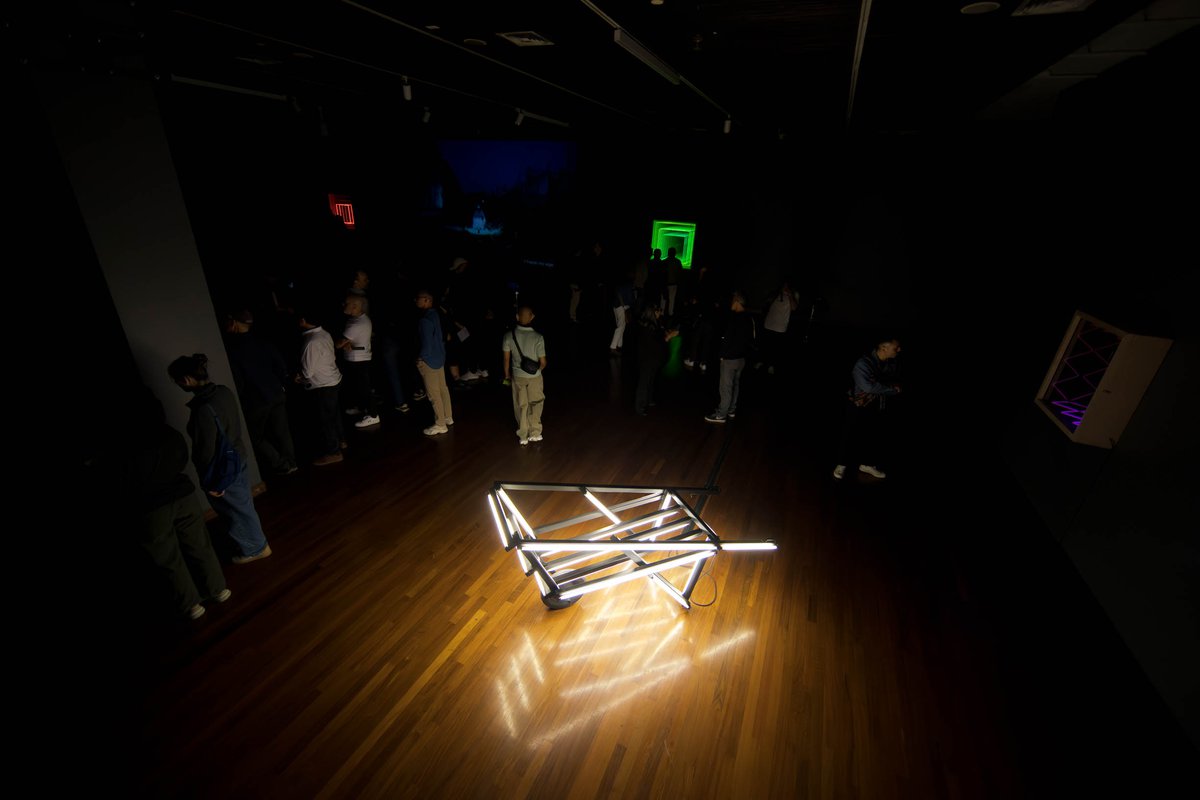
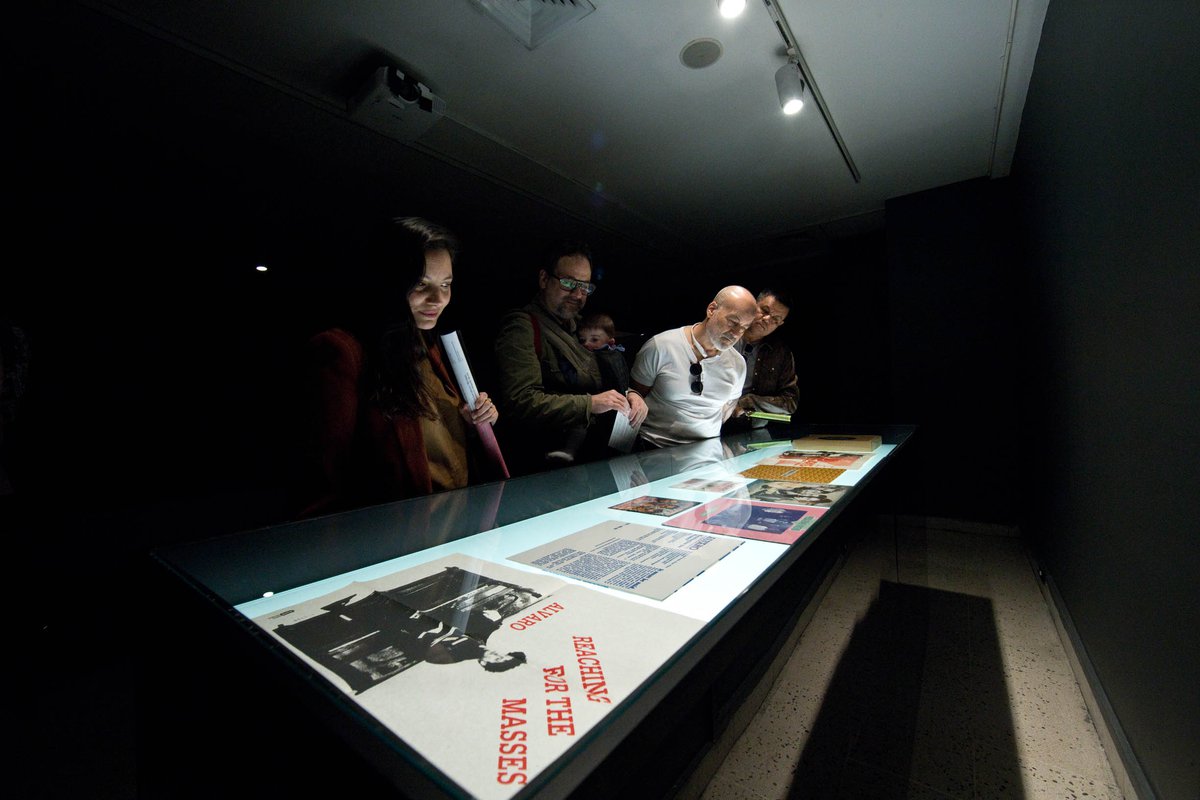
That spirit of collaboration and interdiscipline is what the artist Iván Navarro (Santiago, 1972) and his label Hueso Records (Brooklyn, 2005) want to rescue during the exhibition Penumbra. Where cultural institutions, art and music projects, designers, DJs, artists and journalists make possible this exhibition that connects with lighting works, records, videos, concerts and conversations in the context of the 17th Santiago Media Arts Biennial. "I applaud the power of that generation that brought together poetry, music, crafts, dance, theater and visual arts and managed to flow together. I believe it is the most genuine and effective way to express art, and it takes precedence over the colonizing and European model of exhibiting within "a white cube". A format that came to us from traditional museums where artistic fields tend to be separated. With Penumbra I try to remember that spirit where everything mixes, everyone collaborates and bring back creations that did not see the light of day during the dictatorship," he comments. Navarro.
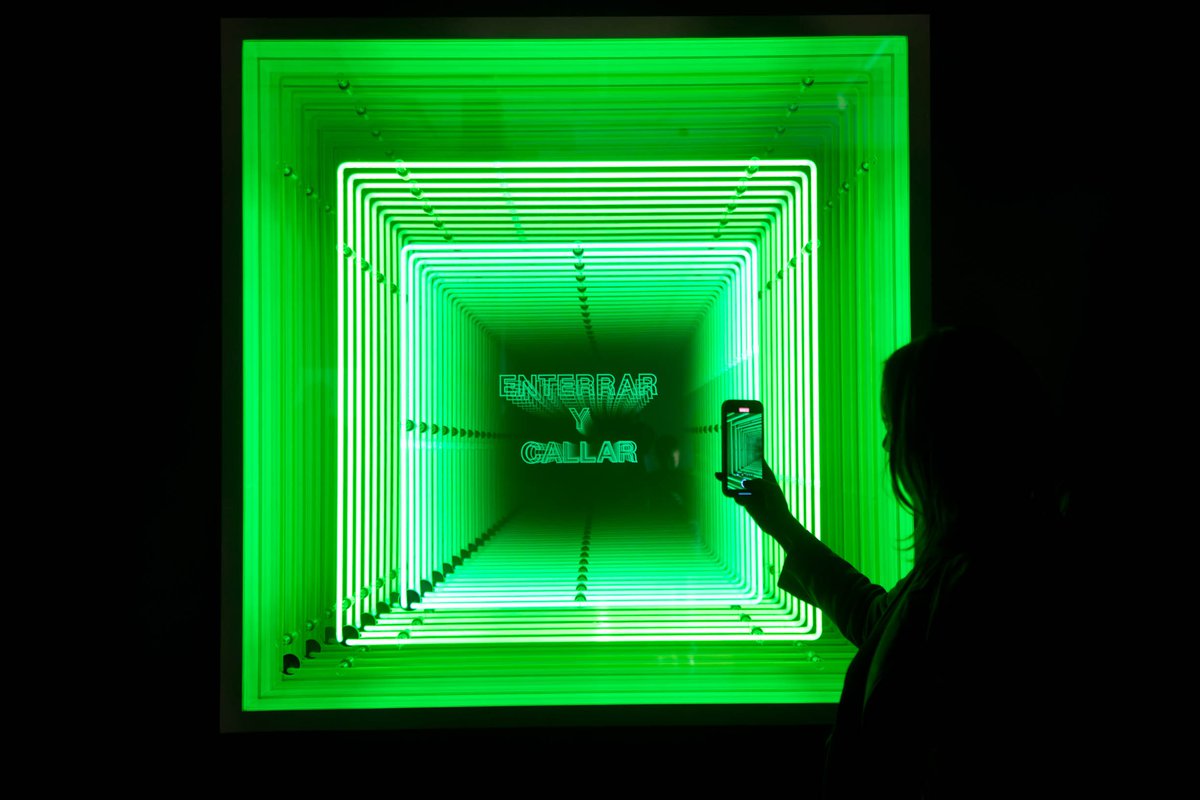
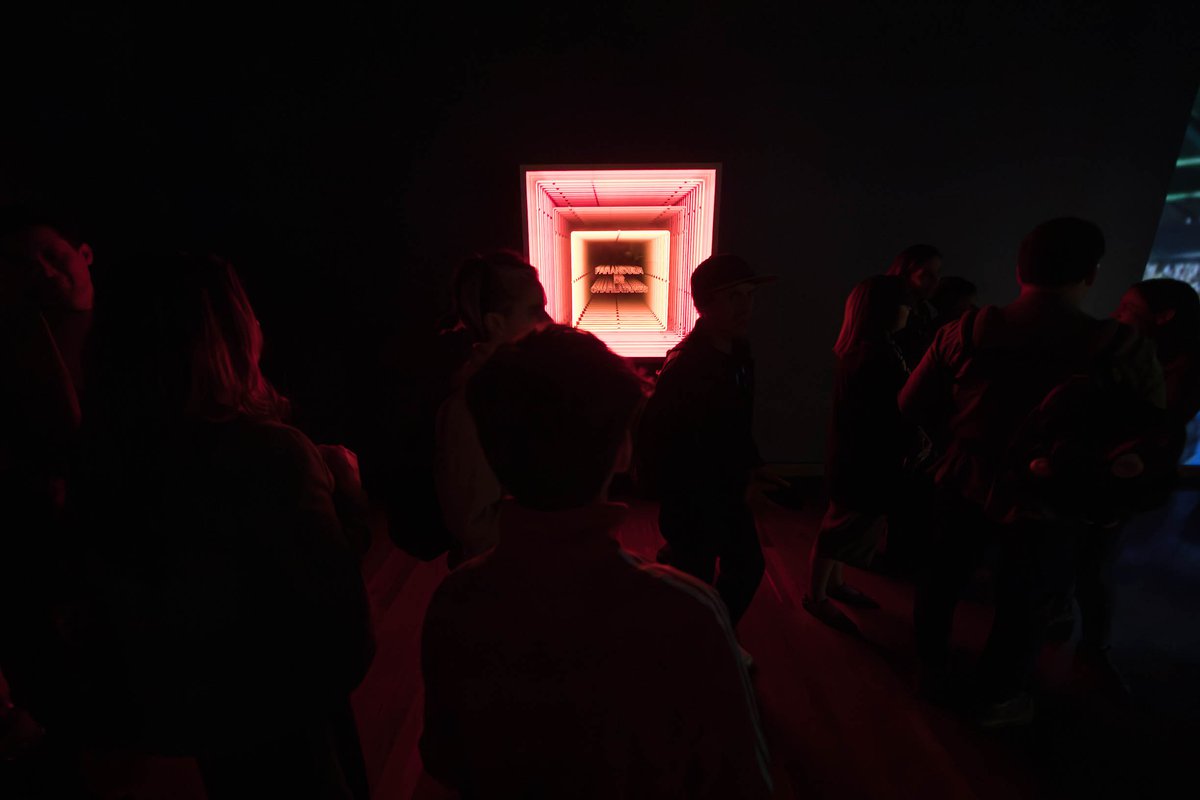
Everything will come together in the GAM Visual Arts Room, with sculptures, objects, video clips and performances by the renowned Chilean artist, among which are the iconic installations “Linterna: I am not from here, I am not from there” (2006), “Enterrar y Callar” (2013), “Frándula de charlatans” (2013), “Break, Crack, Crash, Crush, Hit, Kick, Knock, Scratch, Smack” (cymbal) (2017). The video “Tierra sin Tierra” (2023), the installation “The Music Room IV” (2017), in collaboration with the artist Courtney Smith and the Hueso Records collection “Compilation 1” (2023).
"Iván Navarro's work uses light as a sculptural material and a critical device. Through neon structures and games of reflections, the artist generates illusions of depth that question the perception of space and, at the same time, activate political readings linked to memory. In this version of Hiperrealidades, his research dialogues with the curatorship by placing light as a sensitive mediation between the technological and the social," comments the curator of the 17 BAM - Hyperrealities, Nicolás Oyarce.
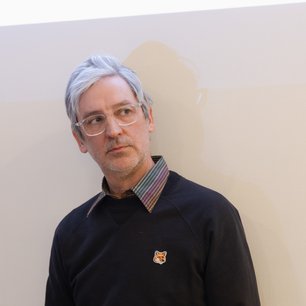
Between 1991 and 1995 he studied a Bachelor of Arts at the Pontificia Universidad Católica de Chile, where he was a student of artists such as Eugenio Dittborn, Eduardo Vilches and the art critic and curator Justo Pastor Mellado (1949-). In 1997 he traveled to New York to complete his artistic training, a place from which he has planned a successful career. His work is part of important public and private collections in various places around the world and has been present in numerous international exhibitions. An example of this is his participation in 2009 at the Venice Biennale, as the first national representative of the Chilean pavilion.
Navarro's work reflects on recent history, exploring the aesthetic and political dimension of electricity, primarily through sculptures and installations that use industrial materials such as fluorescent lights, neons, and mirrors. In addition to the production of his work, he has curated exhibitions alone or with his brother Mario Navarro and has served as a music producer in charge of the experimental label Hueso Records.
The artist resides and works in New York, United States.
11 to 26 Oct 2025
Tues to Sat— 10 a.m. to 9 p.m. (except Oct 24)
Sun— 10 a.m. to 8 p.m.
Sala de Artes Visuales (Edificio B, piso —1)

Extension activities
Conversation: Whispering in the dark
Oct 21 | Tues— 6 to 8 p.m.
FREE on a first-come, first-served basis. Limited spaces
Visual Arts Room
Dialogues within the exhibition “Penumbra” within the framework of the 17th Biennial of Media Arts about collaboration, self-management and the creation of the first biennials produced during the Chilean dictatorship. In addition, two Hueso Records 2025 releases will be discussed in collaboration with ISLAA (Institute for Studies on Latin American Art, NY).
Participating: Cecilia Aguayo, Jaqueline Fresard, Tahía Gómez, Patricia Rivadeneira. María José and Tan Levine. Nicolás Oyarce, Enzo Blondel, Cristián Opazo, Marisol García and Iván Navarro.
Interferences 3: María Sonora
Oct 24 | Fri— 6 p.m.
Visual Arts Room
Participating: María José and Sebastián "Tan" Levine (María Sonora) + screening of the video "Peonía Roja" by Cleopatras + sample of the film "El punk triste" by Mario Navarro and DJ set by Planta Carnívora.
$15,000 General | $11,000 Seniors, students, caregivers and people with disabilities. | -20% discount for Club La Tercera members
Carnavalito Fair
Oct 25 and 26 | Sat 12pm to 9pm | Sun 12 to 8 p.m.
Visual Arts Room
Editorial and musical fair with DJ sets. On Saturday, there will be the launch and sale of the 7" vinyl of Eltrabajos “ Ahora y Siempre Viva Chile ” (2016) HR-50. On Sunday, the performance of the KONANTÜ album “Vid Vida Vidajena” (HR-67) will be held.