


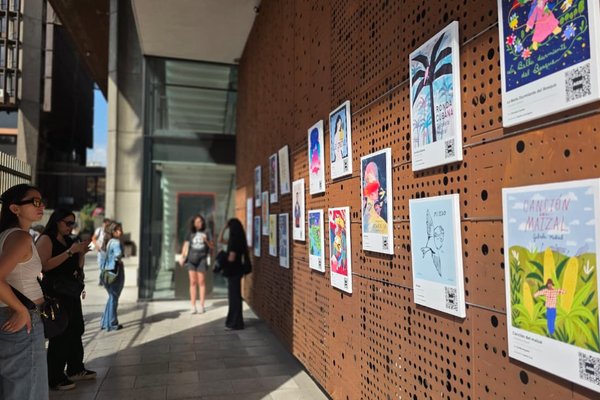
A sensory journey of 42 works by Gabriela Mistral that invite listening and contemplation. The project, conceived and directed by Diego Boggioni and designed by Carmen Di Girolamo, proposes a contemporary look at the work of Gabriela Mistral through sound stories, music and illustration.
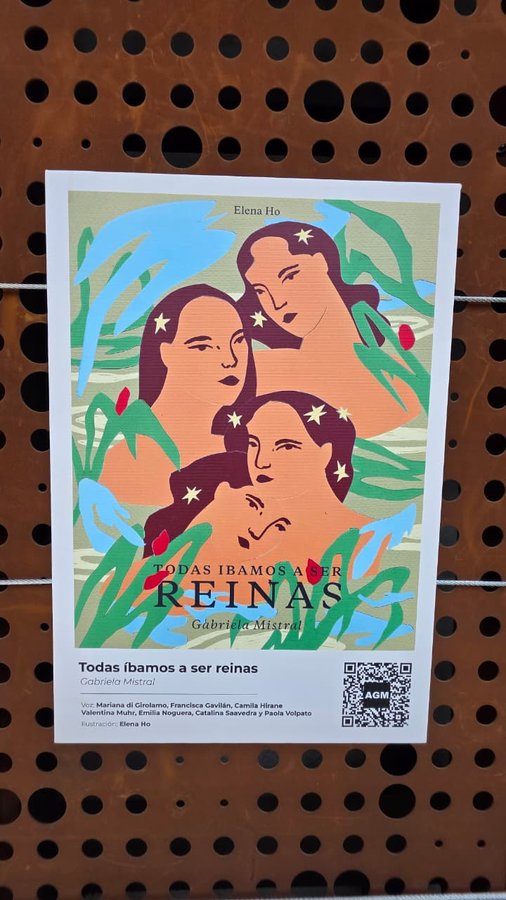
Daniel Muñoz, Francisco Melo, Mariana di Girolamo, Paola Volpato, Catalina Saavedra, Andrés Velasco, Francisca Gavilán, Camila Hirane, Emilia Noguera and Valentina Muhr are part of the national actors and actresses who interpret original stories by the fundamental author in the sound and visual installation composed of 42 voices, 42 poems and 42 contemporary illustrations, made by the artists Milena Hachim, Catalina Bustos, Gertrudis Shaw, Camila Cruz, Carola Josefa, Daniela Le Feuvre, Amelia Strong, Elena Hohlberg, Javiera Maclean and Catalina Cartagena.
Authored and directed by the Chilean actor, director and producer Diego Boggioni, together with the design of Carmen Di Girolamo, the Fondart Nacional 2025 project of the Ministry of Cultures, Arts and Heritage proposes an intimate walk that unites art, memory and technology in public space.
"This project is born from a very simple and very profound question: how do we make Gabriela Mistral speak again today, in the present? The Gabriela Mistral Audio Library is a sound and visual installation that transforms public space into a living library, accessible from any cell phone by simply scanning a QR code. It is a sound and visual experience that brings together 42 voices, 42 poems and 42 contemporary illustrations. It captures the complexity of Gabriela Mistral with enjoyment and emotion for adults and children. boys; not only as a historical figure or as a monument, but as a living voice, more present than ever. It is a space to stop, listen and rediscover his work from a human, entertaining place, making it return and circulate for each one,” explains director Diego Boggioni.
The curatorial process focused on exploring voice as an artistic material and illustration as an interpretive gesture. The voices offer an agile and emotional reading of the Mistralian word, capturing its breathing, its vertigo and its inner strength. Each record was treated as a soundscape, with an immersive effect, where the music and the vibration of the voice are a crucial part of the composition of David Capdepont, Santiago Jara and Diego Boggioni himself, in charge of the sound design.
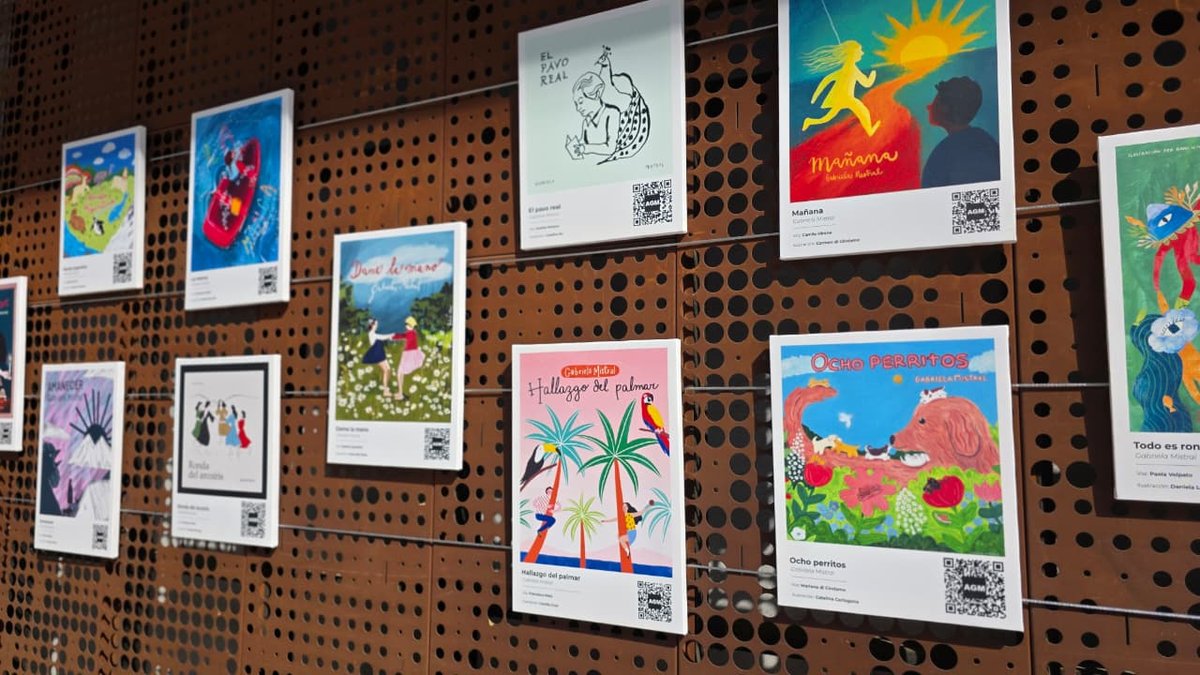
In parallel, the 10 Chilean illustrators summoned for this exhibition—all belonging to different generations and styles—, led by the designer Carmen Di Girolamo, carried out a work of visual translation of the texts based on a free and subjective reading. Milena Hachim, Catalina Bustos, Gertrudis Shaw, Camila Cruz, Carola Josefa, Daniela Le Feuvre, Amelia Strong, Elena Hohlberg, Javiera Maclean and Catalina Cartagena give shape to 42 graphic pieces that oscillate between the figurative and the abstract, between poetic synthesis and symbolic load. His works do not illustrate the poems, but reinterpret them, opening new layers of meaning and sensitivity.
"Each illustration was conceived as an autonomous, but interconnected, territory, where color, texture and shape dialogue with the cadence of the voice. The set of 42 pieces builds an emotional map of the Mistralian universe, crossed by themes such as childhood, motherhood, nature, loss, Latin American identity and spirituality. Its installation transforms everyday traffic into a poetic act," details Boggioni.
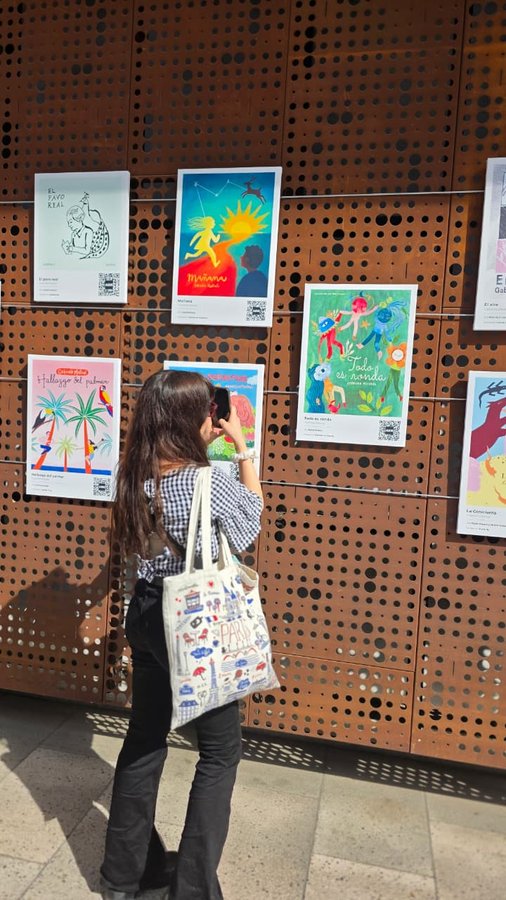
The works, arranged along the 22 meters of the space, face the viewer like fragments of a large sound mural. The QR codes installed next to each illustration allow access to the corresponding sound interpretation, creating a dynamic tour in which each visitor can choose their own pace of contemplation and listening.
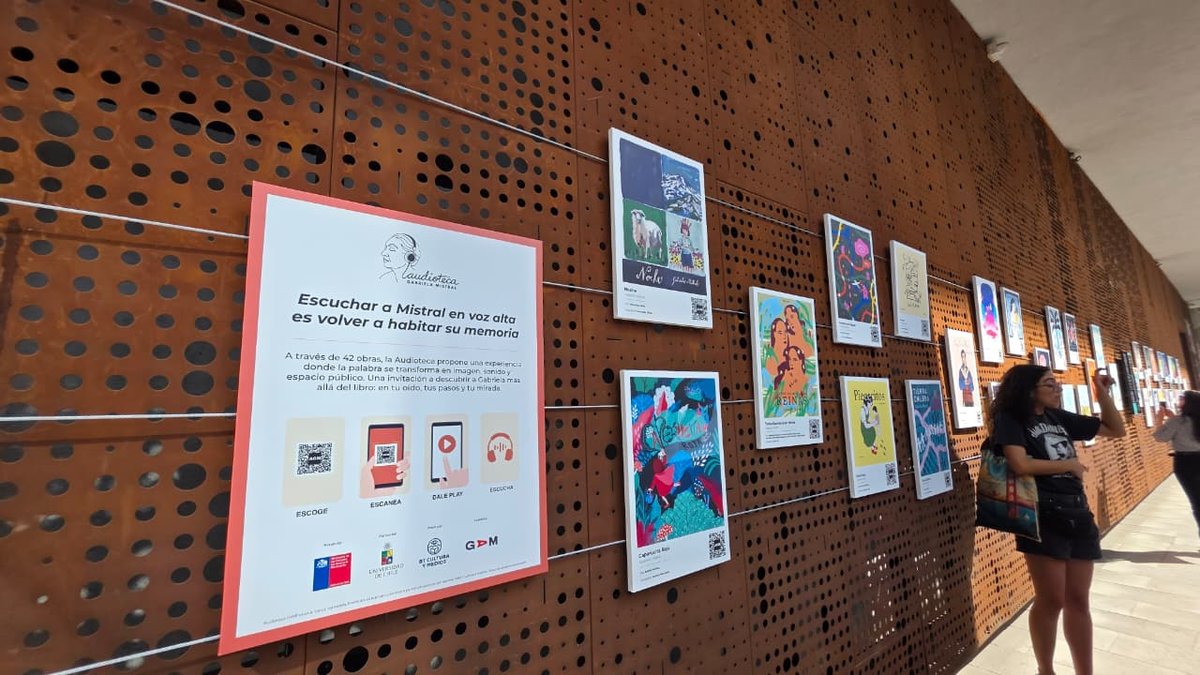
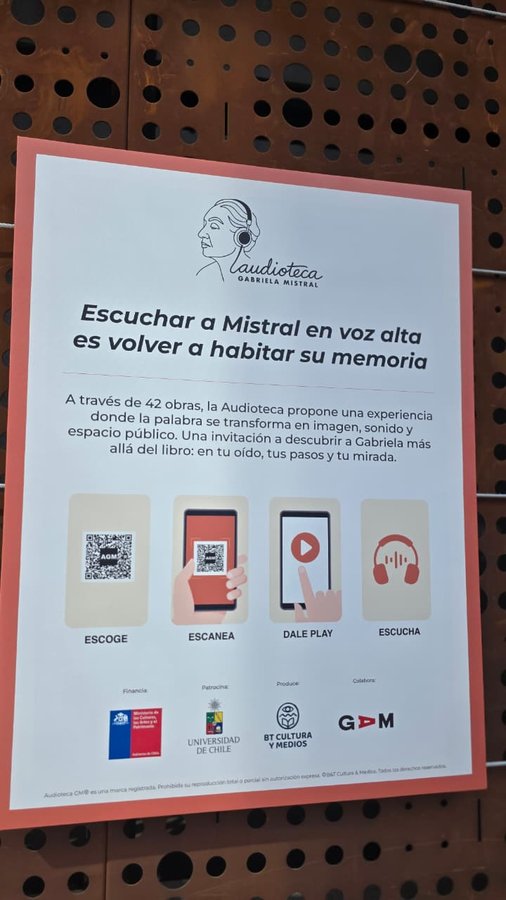
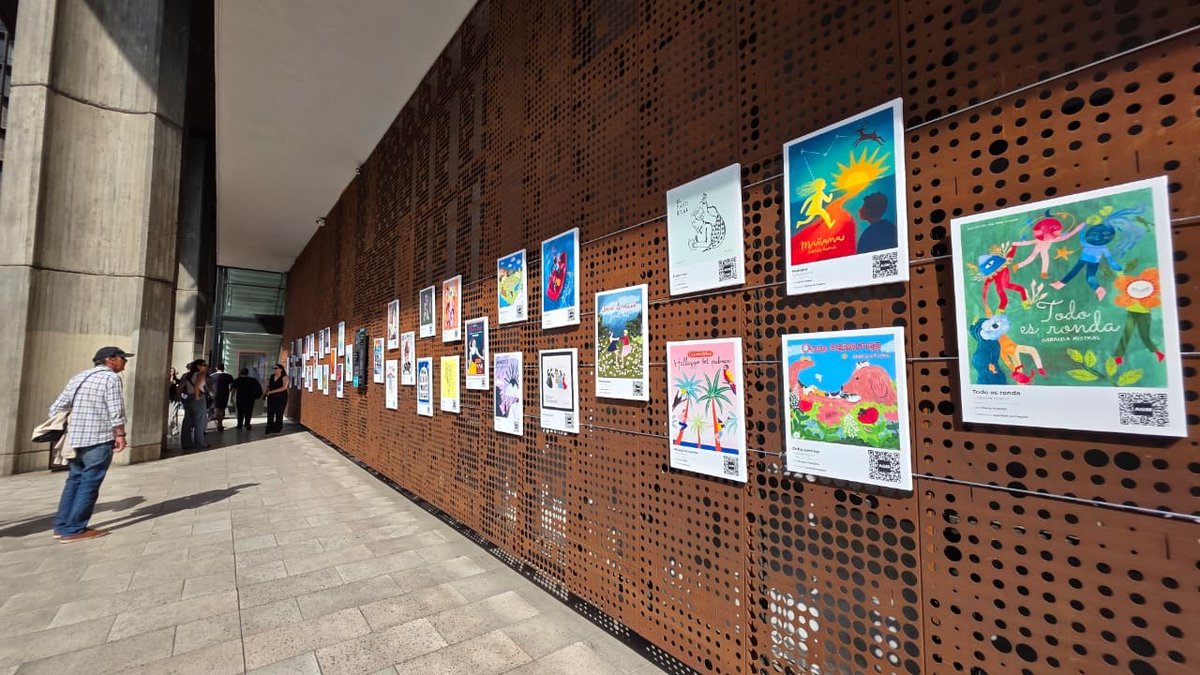
“This project was born from a very simple and very profound question: how do we make Gabriela Mistral speak again today, in the present? The Gabriela Mistral Audio Library is a sound and visual installation that transforms public space into a living library, accessible from any cell phone by simply scanning a QR code”
— Diego Boggioni, author and director.
Dec 13, 2025 to Jan 31, 2026
Mon to Sun— 9 a.m. to 10 p.m.

Dec 31, 2025: open until 2 p.m. Closed Jan 1, 2026.