


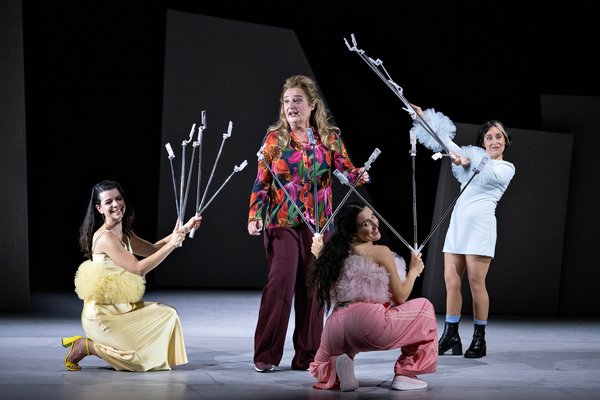
Ana Luz Ormazábal directs this GAM-Theater Heidelberg (Germany) Co-production, with the collaboration of the Goethe-Institut Chile, which reflects on the seduction of the languages of hate and the power of misinformation. A piece that analyzes how extremist discourses use social networks and the media to build and promote fear of difference, foreignness and political polarization.
Do social networks promote hate and polarization? Is there media manipulation in hate speech and polarization? The theater asks itself these uncomfortable questions and brings them to the stage through Propaganda, a work that delves into dissemination in times where theories such as that of the “Great Replacement” – formulated by the French writer Jean Raspail who maintains that European identity and civilization are in danger of extinction due to mass migration – are gaining strength both in Europe and in Latin America.
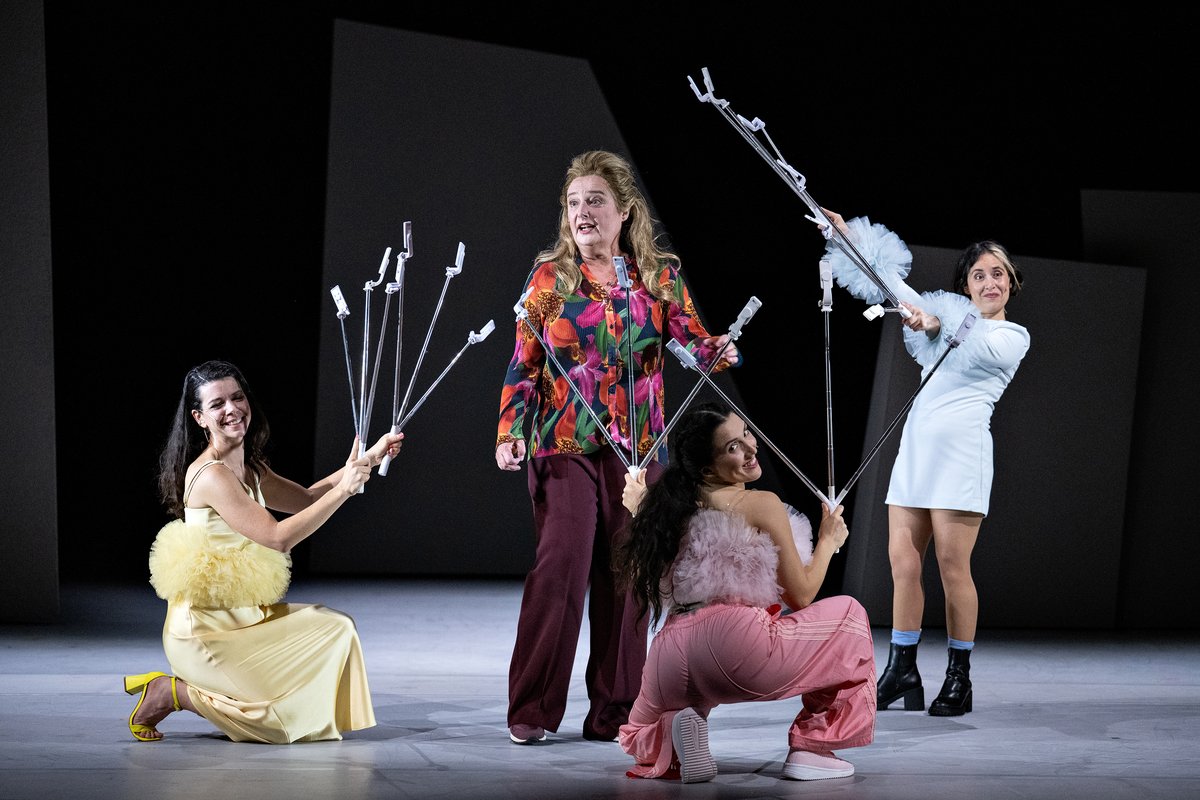
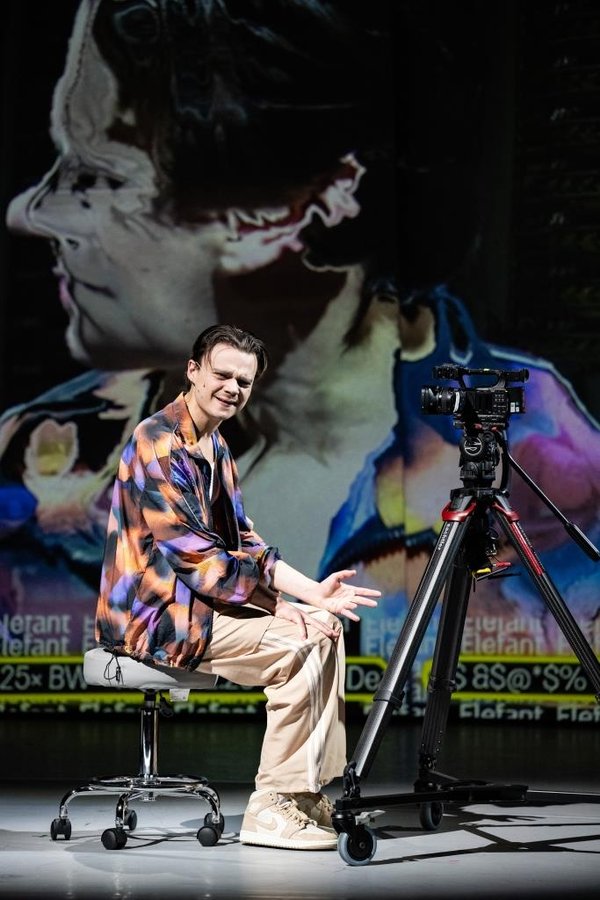
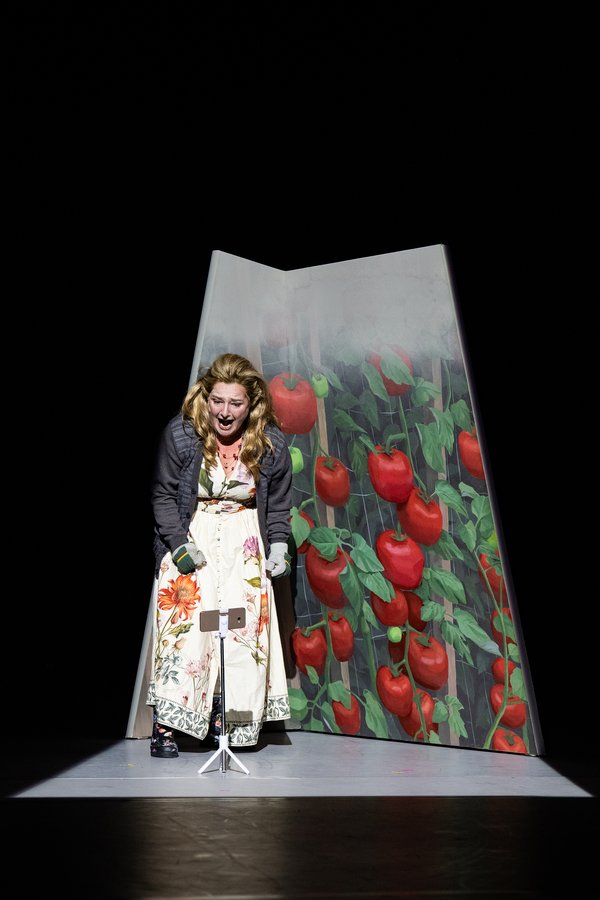
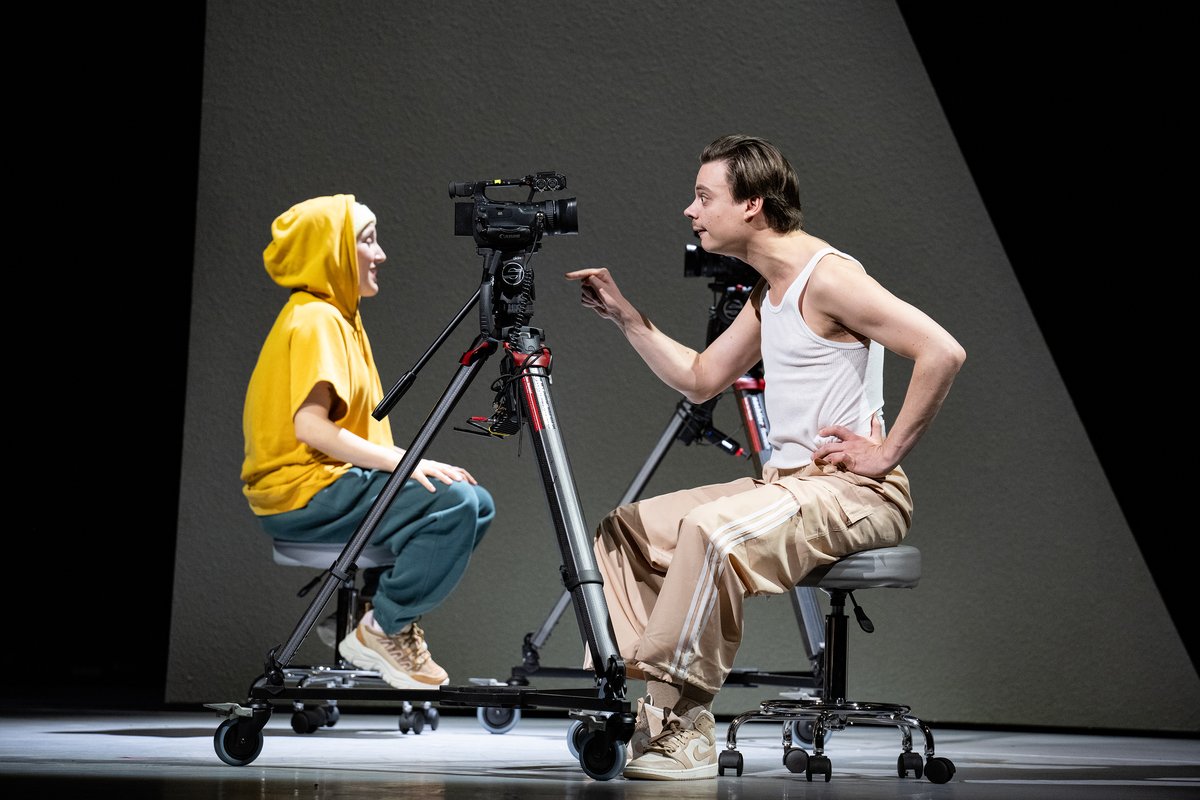
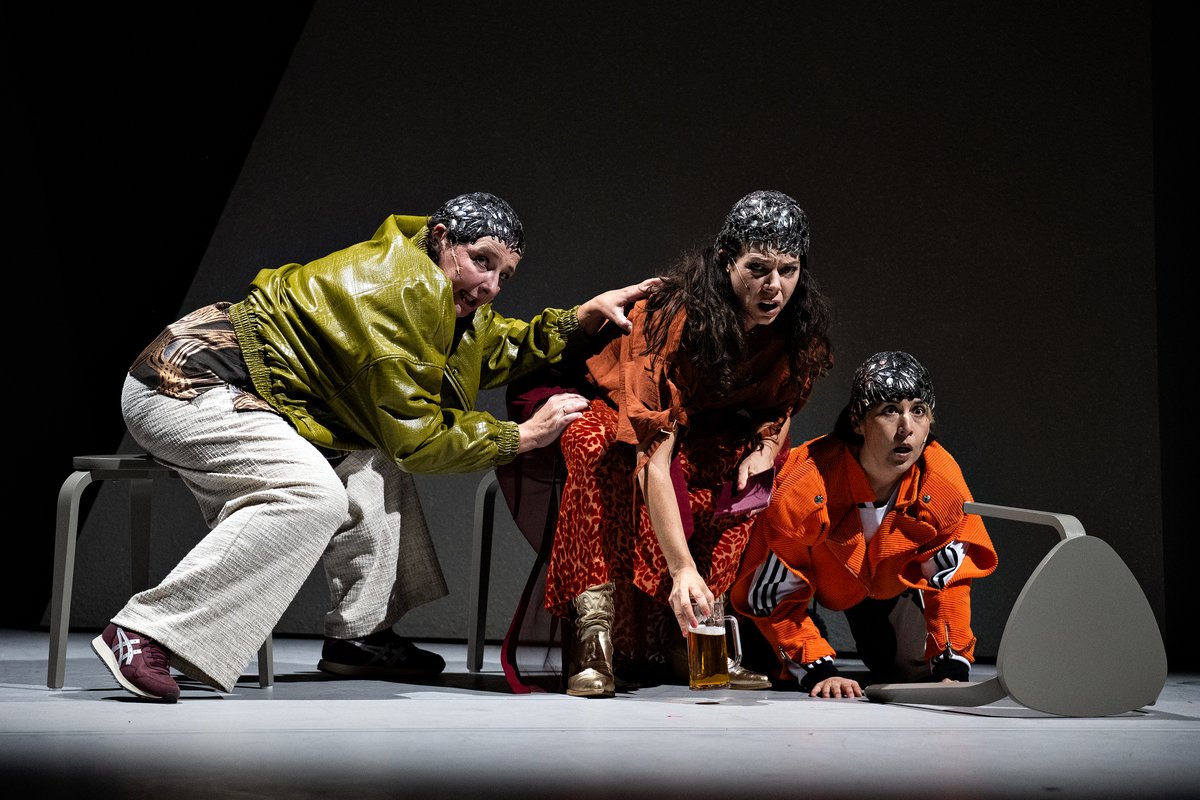
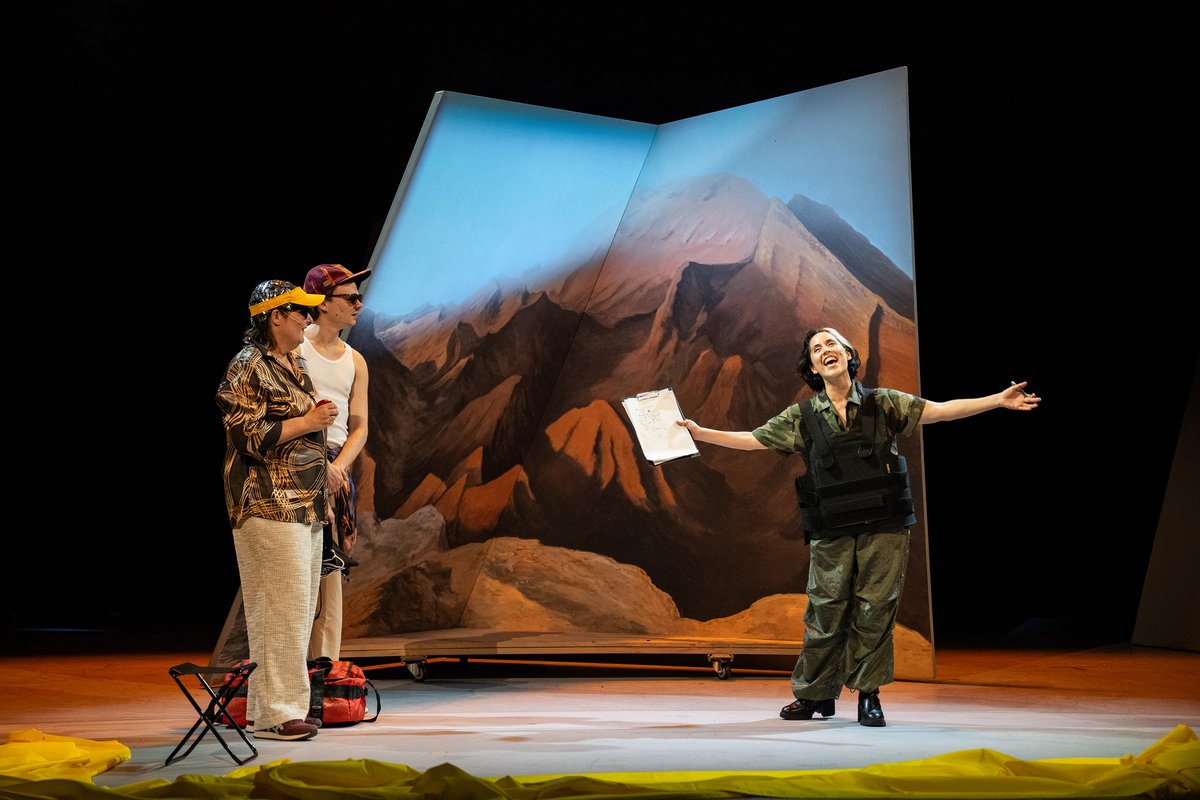
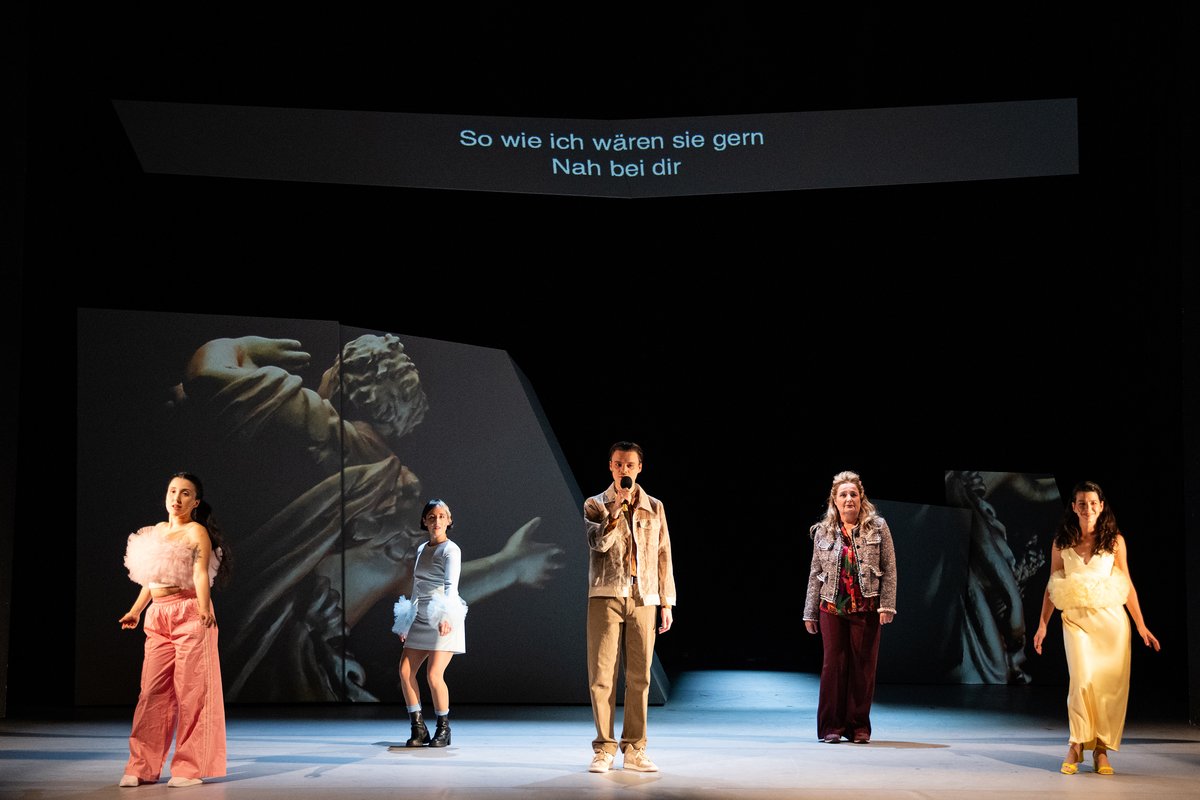
On stage, two semi-successful German influencers shoot hateful and seductive messages to thousands of people around the world. A leader of the German identity movement ignites her followers in Chile and together they train and conspire on how to spread the ideas that link them. A bomb falls and a new war breaks out. European immigrants arrive in NeoChile and a border guard debates whether to allow them passage or not.
The work is an investigation into the permanent dispute over words in times of crisis and war. The staging explores language as action: words that do things, destroy and reconstruct meanings, transforming themselves through repetition, rewriting and the creation of their own terminology. From there, the work investigates the power of language in a context marked by acceleration, technological immediacy and the saturation of discourses.
The proposal invites the public to critically reflect on information, misinformation and power relations, showing how these dynamics are repeated over time, tensioning two different cultures and systems when they meet.
"Beyond ideological labels, the work looks squarely at human contradiction: that dark, authoritarian zone that we all carry inside. Not to celebrate it, but to ask ourselves what we do with it," comments Ana Luz Ormazábal, director.
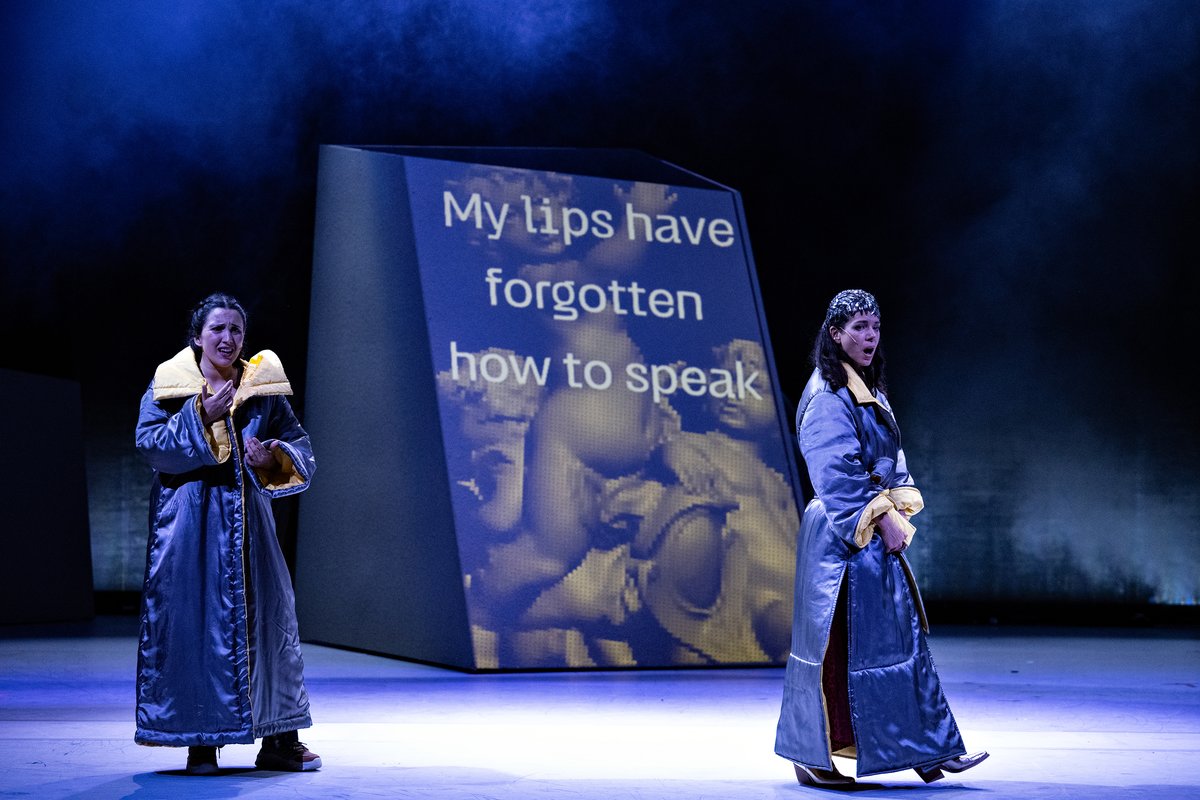
In Propaganda, in addition, the interpreters speak in four languages: Spanish, German, French and English. A fragmented structure, where different narratives appear, are interrupted and overlap until leading, almost inevitably, to war.
"For me, Propaganda also prolongs a historical question that was opened with María Isabel. Only this time, instead of telling a specific story, I return to the stories that we inherited, to try to think about the contradictions of the present. I am interested in looking at the punitivisms of both the right and the left, the role of the algorithm and the way in which we end up speaking only among those who think alike, without friction, without real dispute," he points out. Ormazabal.
"The work shows that hate is not random. The terms used, the chains of associations, the images, the perception schemes that allow categorization and judgment, everything is cultivated," adds actress Ignacia Agüero. Meanwhile, its author, Juan Pablo Troncoso, states: "Propaganda is not only built from bodies, staging, audiovisual devices, lighting, etc., but it also makes a commitment and a defense to enter that mud that means disputing words."
Director: Ana Luz Ormazábal | Authors: Juan Pablo Troncoso (Chile), Björn Deigner (Germany) | Cast: Ignacia Agüero, Josefa Cavada, Mariela Mignot, Nicole Averkamp, Leon Maria Spiegelberg | Dramaturgist: Deborah Raulin | Interpreter and translator: Monika Moldovanyi | Musician and composer: José Manuel Gatica Eguiguren | Video and audiovisual design: Pablo Mois | Set and costume design: Maria Walter | Lighting Design: Ralph Schanz | Executive production: Ilona Goyeneche | Production and direction assistant (Chile): Nerea Lubbert Retuerto | Assistant director (Germany): Georg Zahn.
Collaborator: Goethe-Institut Chile

Complement this work with a radical conversation
On Tuesday, April 21, we will talk about "The era of fake and deepfake" in Ventanal Alameda, regarding the topic of Propaganda. Hosted by: Paloma Ávila / Panelists: Ximena Jara, Juan Pablo Troncoso and Marcelo Mendoza.
Register for free to attend.
“For me, Propaganda also prolongs a historical question that was opened with María Isabel. Only this time, instead of telling a specific story, I return to the past, to the right, to dictatorships, to the stories we inherited, to try to think about the contradictions of the present.”
— Ana Luz Ormazábal, director.
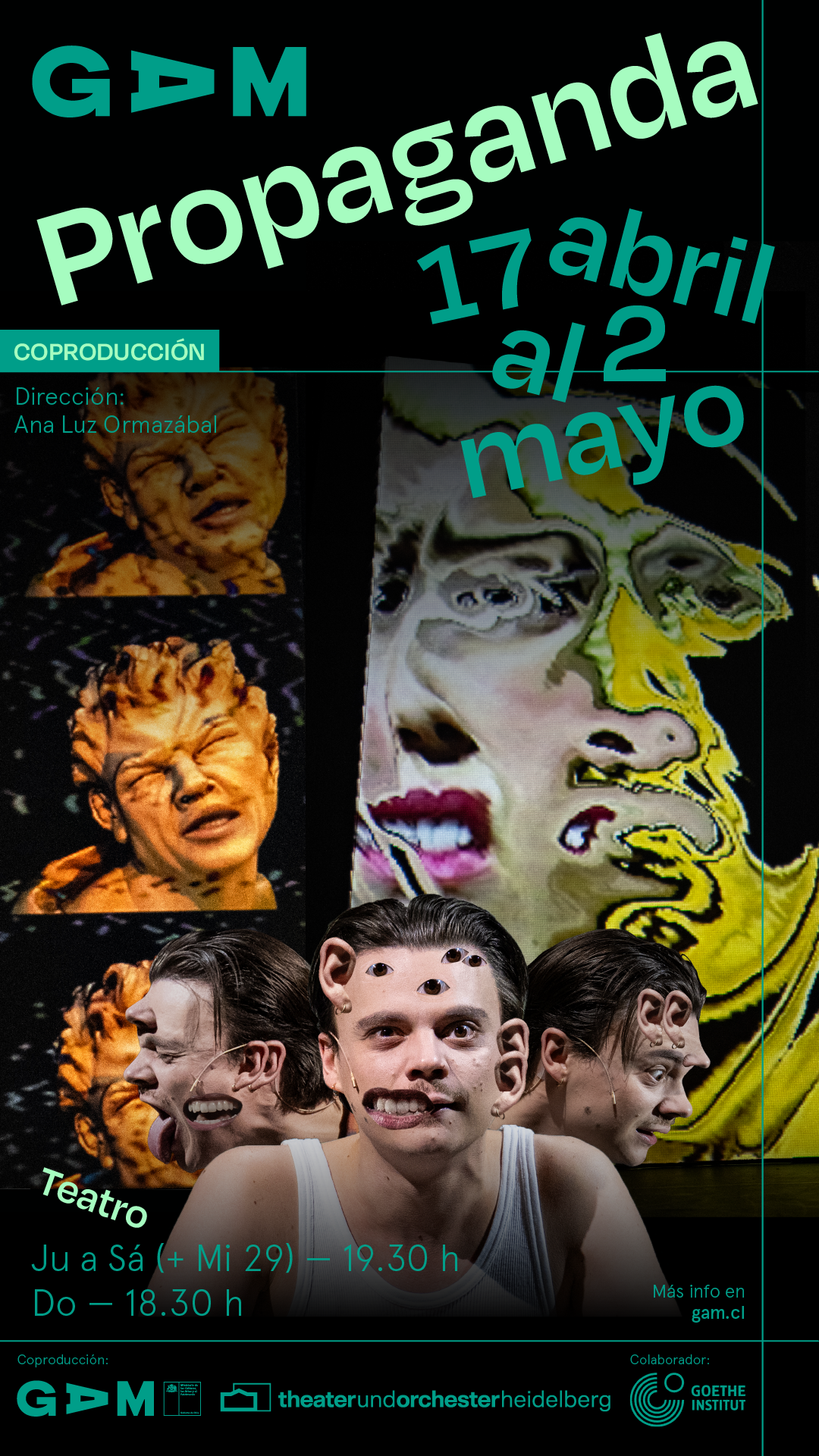

Apr 17 to May 2, 2026
Thu to Sat (+ Wed 29)— 7:30 p.m.
Sun— 6:30 p.m.
Sala A2 (Edificio A, piso 1)
$15,000 General.
$10,500 Seniors, students, caregivers and people with disabilities.
$19,500 VIP (best locations)
$13,700 VIP Seniors, students, caregivers and people with disabilities.
$7,500 Partial view
-20% discount for Club La Tercera members (Thu to Sat).
-30% discount for members of the Theater Network Network.
-2x1 General. BiblioGAM Membership and GAM Teachers Membership only Thursdays and Fridays.
-50% discount only Thursdays and Fridays for students of performing and musical arts, artistic schools and partners of SIDARTE, SINATTAD, SCD, ADTRESS, CHILE ACTORS.
*Exclusive discounts for the general value. Not combinable with other promotions and VIP and partial values.
All discounts (except Club La Tercera and Red de Salas) are applied in person at the GAM Ticket Office by presenting credentials.
Post-function discussion: Thursday, April 23.
14+ years | Duration: 100 min.
Accessibility
This montage uses smoke and/or dust in suspension, strobe light, subtitled work.
The work is done in 4 languages: Spanish, French, English and German