


VI International Seminar on Cultural Management: Artistic Mediation
The seminar proposes to reflect on the concept of artistic mediation, from cultural management, education and the arts. To do this, emphasis will be placed on their new paradigms, practices and experiences in the national and international field.
- Until recently, it was thought that the function of artistic mediation was precisely to mediate, explain or intercede between the work of art and the people who observed it. It was used as a tool for viewers to access the contents of the work, decipher the messages and understand them. This modern view of art did not integrate the processes of artistic creation.
- Nowadays, however, cultural managers and mediators face a new paradigm when approaching artistic mediation and their work. Today there is an increase in projects, research and theories around mediation, which argue that art and creativity can revolutionize learning and even be an engine of critical knowledge that contributes to social and human development.
- Concepts such as “Art Thinking”, by the Spanish theorist María Acaso, are currently tools that allow innovation in the way in which art and education can be related, art no longer being understood as a product located in a museum or within a theater, to become a vehicle of transformation and creativity.
- The Seminar will seek to open perspectives and build possible roadmaps in new forms of artistic mediation through presentations, conversation tables and concrete experiences.
Video presentations
Downloadable
Program
|
MAY 17 |
|
| 10 a.m. |
Welcome words • Room A1
María José Cifuentes, director of GAM programming and linkage. Presentation of the seminar methodology and contexts on the new creation of the GAM Linkage and Mediation area. |
| 10.10am |
International Keynote • Room A1 About the concept of Art ThinkingMaría Acaso, researcher and theorist, founding partner of the Pedagogías Invisibles collective and creator of the Art Thinking concept (Spain). |
| 10:30 — 11:30 a.m. |
Panel • Room A1 How can artistic creation contribute to learning?Artists and researchers answer this question, considering experiences and case studies, where art has functioned as an agent of critical thinking and learning in the classroom. PARTICIPATE |
| 11:30 — 11:45 a.m. | Coffee • Coffee • Coffee |
| 11:45 a.m. — 12:40 p.m. |
Context • Room A1 How is creativity revolutionizing pedagogy?We invite Chilean authorities to reflect together on the contributions of art to learning, but also on its intersections, powers and challenges. PARTICIPATE |
| 12:40 - 1:40 p.m. |
Conversation • Room A1 How are the arts contributing with their methodologies to the learning and critical thinking of childhood and adolescence?We invite cultural agents, museums and spaces that work with this public to think today about the challenges that their institutions have identified. PARTICIPATE |
| 1:40 p.m. — 2 p.m. |
Questions • Room A1 Results of the day's methodology. Conclusions. |
| 2:30 p.m. — 3:30 p.m. |
Experience • Hall A PerceptometersLive experience of the stage experimentation laboratory Look and look back and Question Project of the Mil M2 collective. |
| 3:30 p.m. |
Closing of the day • Room A1 |
|
MAY 18 |
|
| 10 a.m. |
Welcome words and summary of the previous day • Room A1 María José Cifuentes, director of GAM Programming and Linkage. |
| 10.10am |
International Keynote • Room A1 Introduction to New perspectives on art, learning and artistic mediation from institutionalityCristina Alonso, co-director Teatro L´Artesa, Barcelona (Spain). |
| 10:30 — 11:30 a.m. |
Panel • Room A1 How can art transform education? o How can art form citizenship?Research, case studies, on new views and thoughts around artistic mediation. Presentation of the perceptometers project and other international examples. PARTICIPATE |
| 11:30 a.m. — 12 p.m. | Coffee • Coffee • Coffee |
| 12:00 - 1:00 p.m. |
Panel • Room A1 What does the mediation of the future look like?Different Ibero-American institutions reflect on the future of the concept of artistic mediation, address new challenges and present objectives and proposals for the creation of a new Ibero-American project. PARTICIPATE |
| 1 – 1:30 p.m. |
Questions • Room A1 Questions and conclusions |
| 1:30 p.m. |
Closing seminar • Room A1 |
Guests
Felipe Correa
Chile
Cineasta, director de Gaticine y Planos del mundo
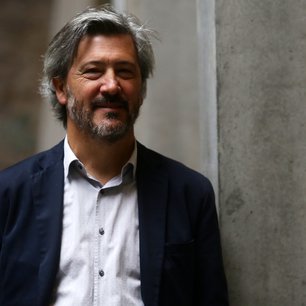
Gloria Aguayo
Chile
Directora regional Balmaceda Arte Joven
All activities