


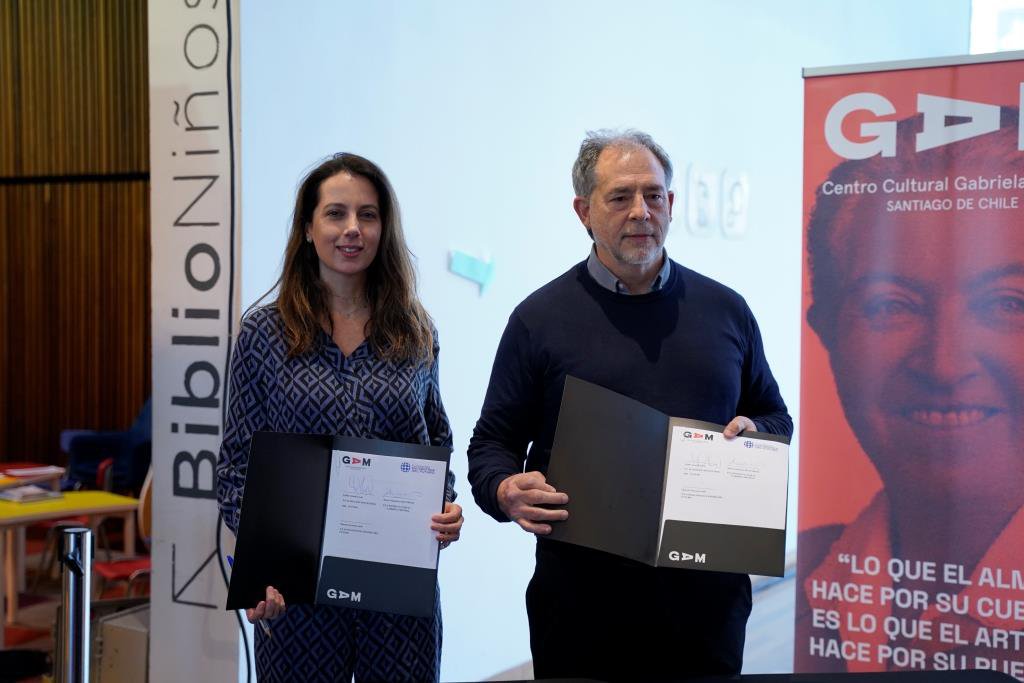
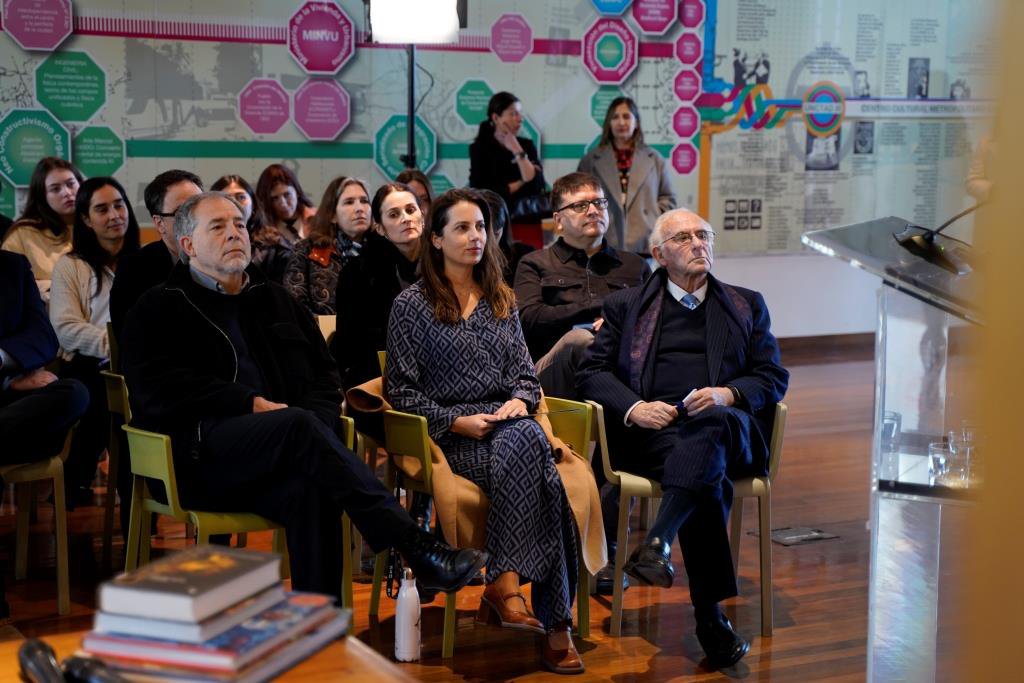
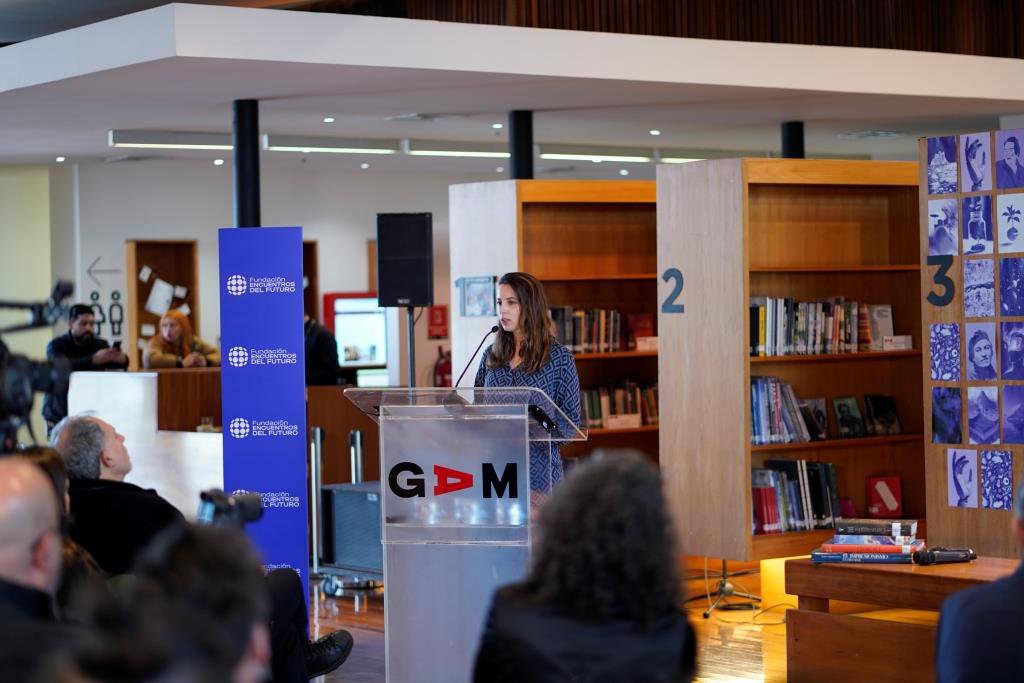
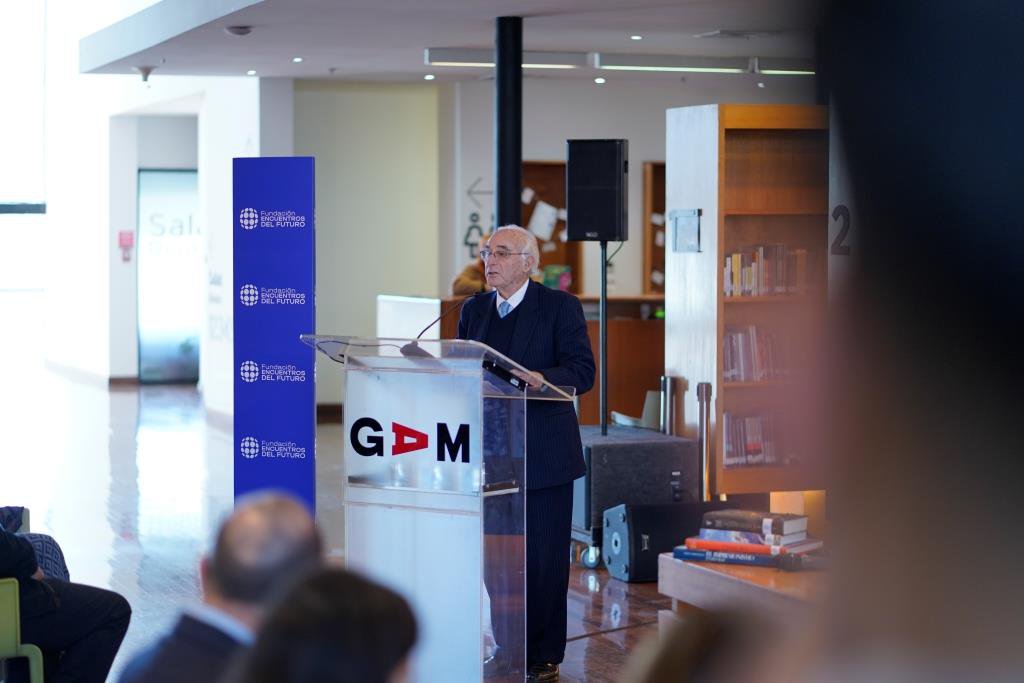
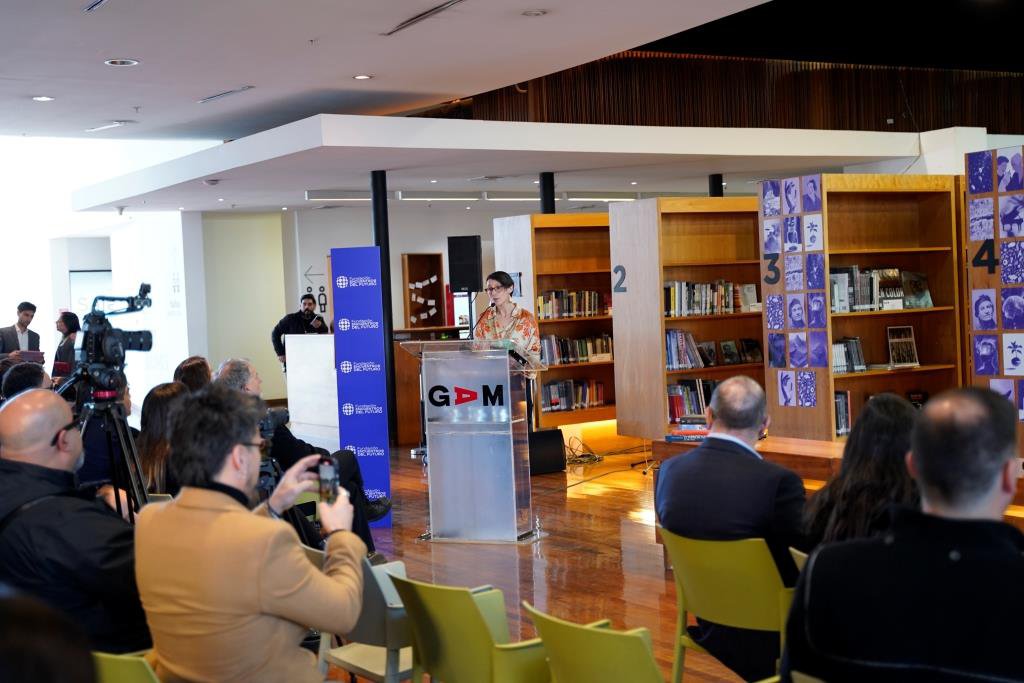
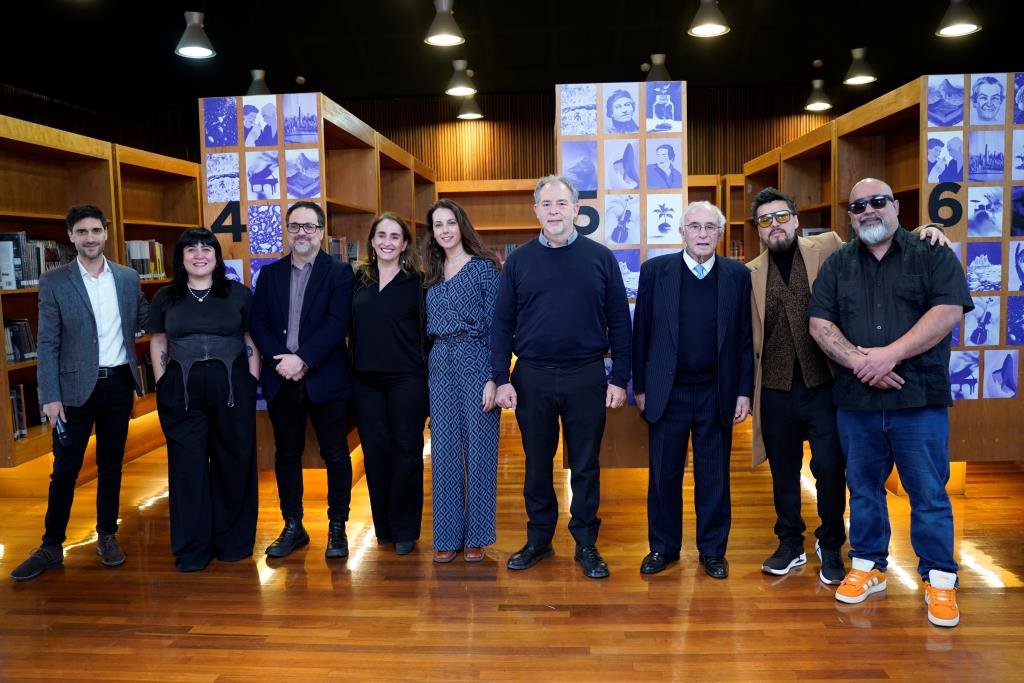
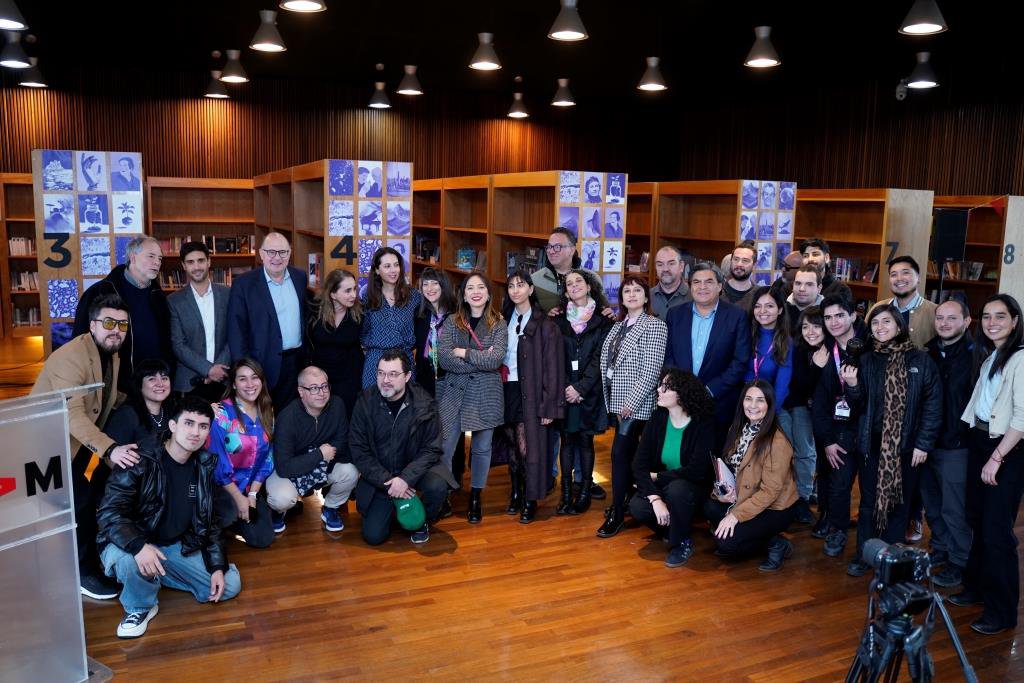
The ceremony, held at BiblioGAM and led by the scientific communicator and President of Achipec, Macarena Rojas Abalos, featured welcoming words from Alejandra Martí Olbrich, executive director of GAM; Sergio Bitar, president of the FEF Board of Directors; and Guido Girardi, executive vice president of the Foundation. All of them agreed on the relevance of bringing scientific and technological knowledge closer to citizens through art and culture.
“For GAM, creativity is fundamental for the construction of the future and we believe that art and science must go hand in hand for the sustainable development of societies. As a house of creativity we want to bring together talents in the performing arts and music, but also develop a programmatic axis linked to thinking and reflection of the future. In this line, the alliance with Fundación Encuentros del Futuro acquires total relevance. New technologies will shape the cultural ecosystem and creative industries and that is why we project ourselves as an urban laboratory where performing, visual, media and community arts intersect with education, sustainability, memory and the city,” said Alejandra Martí Olbrich, executive director of the Gabriela Mistral Cultural Center.
The president of the board of directors of the Encuentros del Futuro Foundation, Sergio Bitar, commented that: “Today more than ever, science and art must dialogue. The world is discussing how artificial intelligence replicates structures of the human brain, how quantum computing advances and even whether we can replicate consciousness or the soul. And it is precisely in music and art where we find what is closest to the human soul. Therefore, the space we open with this agreement is key to reflect about how these technologies will transform our lives in the coming decades, and how we can ensure that they continue to be at the service of human beings and their critical spirit.
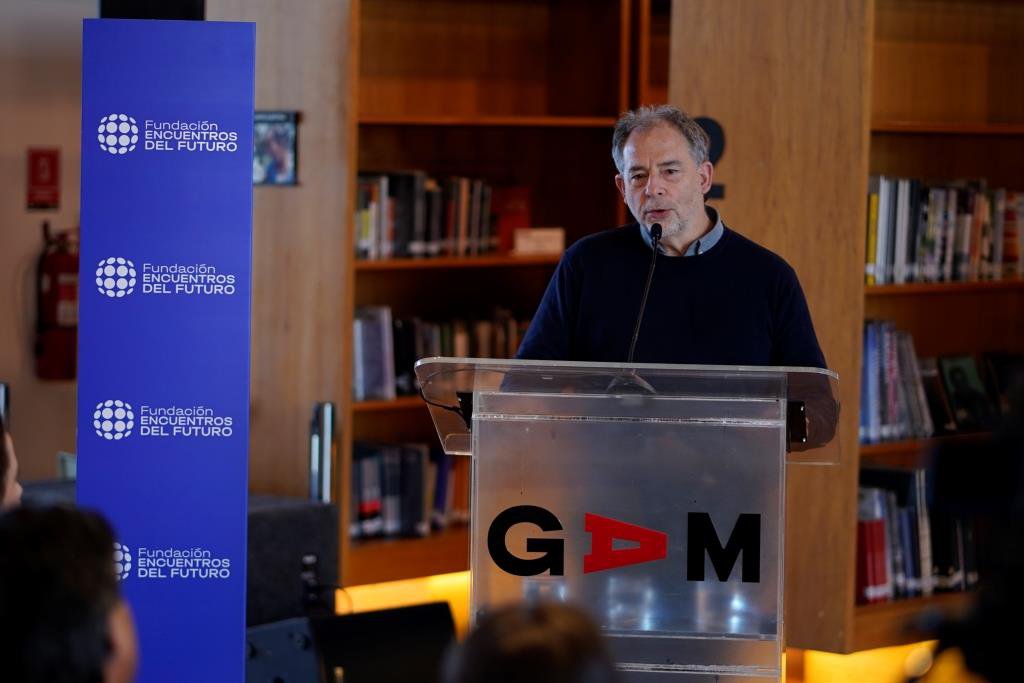
For his part, Guido Girardi, executive vice president of FEF, highlighted the deep connection between science and culture, ensuring that both are creative and innovative processes, authentic “mental laboratories that build beauty”, since, in his opinion, “science is beauty and culture is beauty.”
And he added that: “What one sees today is that, just as technology and science open up gigantic opportunities, they also generate gigantic threats. I always thought that artificial intelligence, its limit was the creative dimension of the human. But no. There is already creative content and capabilities in artificial intelligence that offers us pieces of music, works of art, that are indistinguishable from those made by humans. I am not going to say if they are better or not, but they are indistinguishable from those created by humans. So, we are experiencing a frontier of supplantation of what is fundamental, of what makes us human.”
After the signing of the agreement, the discussion “Can machines create a work of art?” was held, moderated by journalist Ignacio Franzani. The meeting brought together prominent exponents of the scientific and artistic world to debate artificial intelligence, computational creativity and the ethical and philosophical challenges that arise when technology is integrated into the creative process.
The panelists included Óscar Cartagena, founder and president of the Chilean Association of Immersive Experiences (ACHEX A.G.), who delved into the impact of emerging technologies on artistic creation and the need for clear regulatory frameworks; and Danilo García Medrano, visual artist, illustrator and composer, who shared his experience creating Shadows, the first Chilean album made with artificial intelligence and renowned musicians.
The day also featured musical interventions by Masquemusica (Macarena Campos), national singer and composer, who performed pieces at the beginning and closing of the conversation, fusing R&B and soul with the reflective atmosphere of the meeting.
With this alliance, GAM and FEF seek to generate new spaces for meeting and exchange, promoting conversations that integrate art, science and citizenship, and exploring how technology redefines creative processes and the limits of what we understand by art.
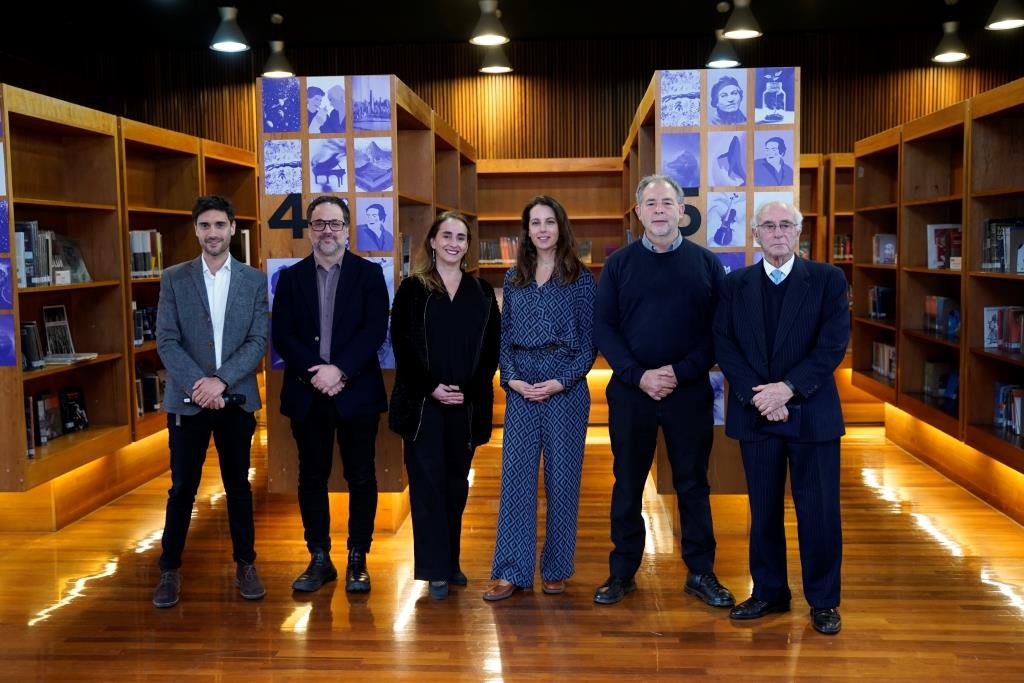
“For GAM, creativity is essential for building the future and we believe that art and science must go hand in hand for the sustainable development of societies. As a house of creativity we want to bring together performing and musical talents, but also develop a programmatic axis linked to thinking and reflecting on the future. In this line, the alliance with Fundación Encuentros del Futuro acquires total relevance. New technologies will shape the cultural ecosystem and creative industries and that is why we project ourselves as an urban laboratory where performing, visual, media and community arts intersect with education, sustainability, memory and the city.”
— Alejandra Martí Olbrich, GAM executive director.