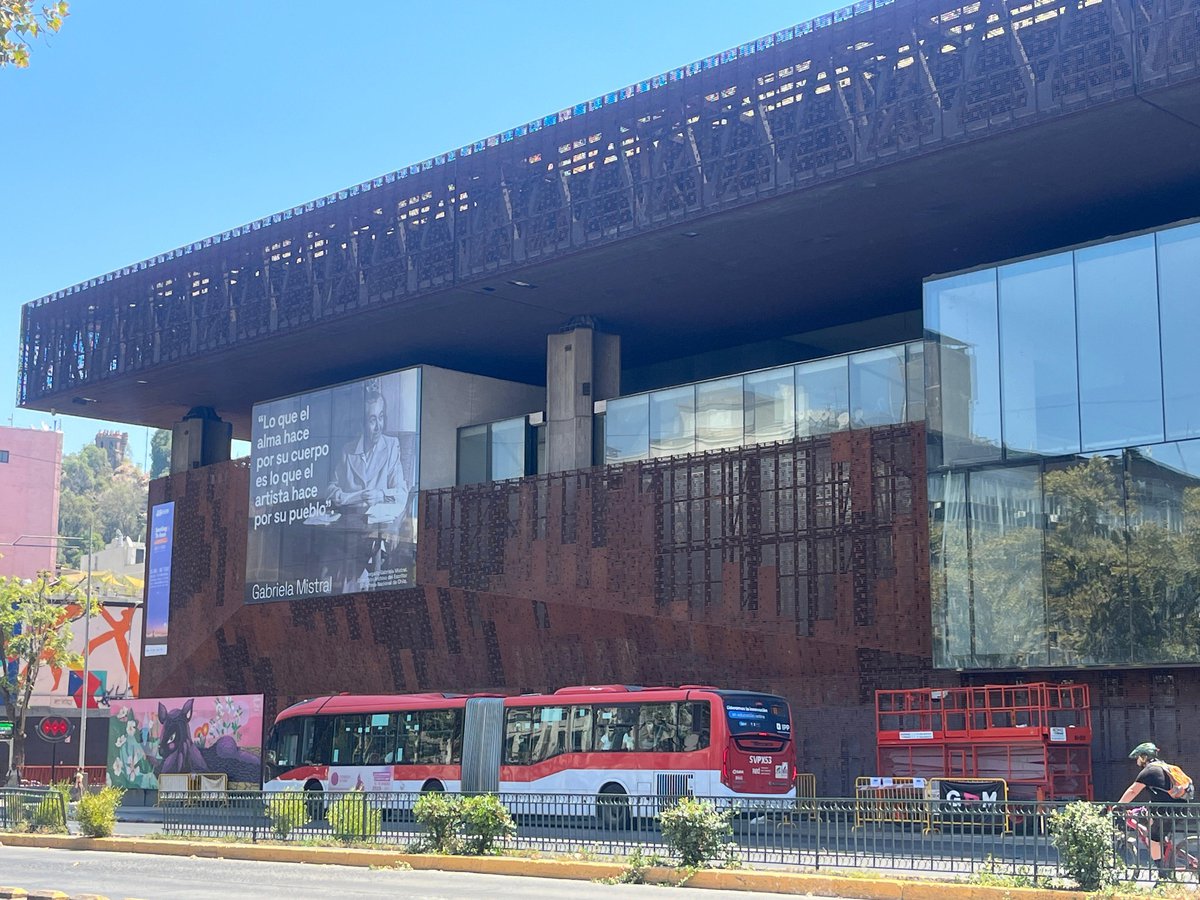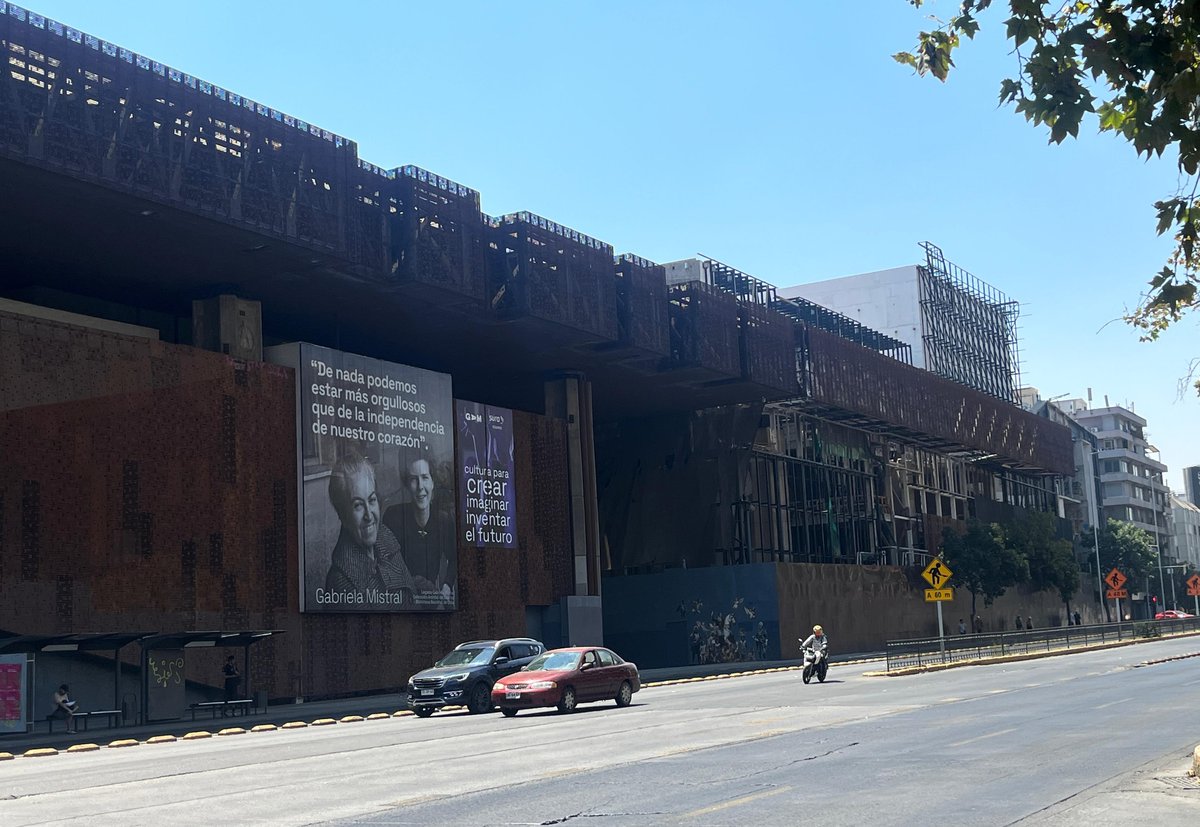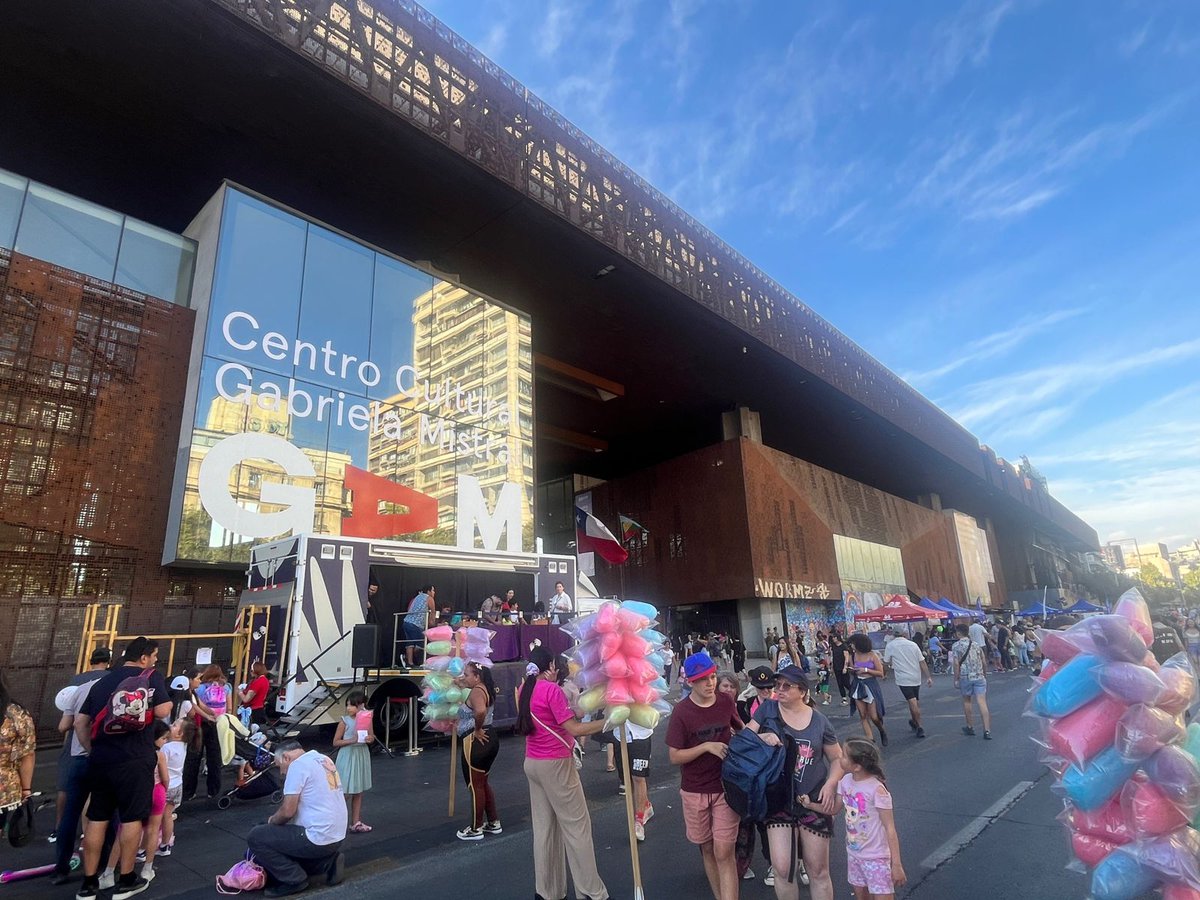


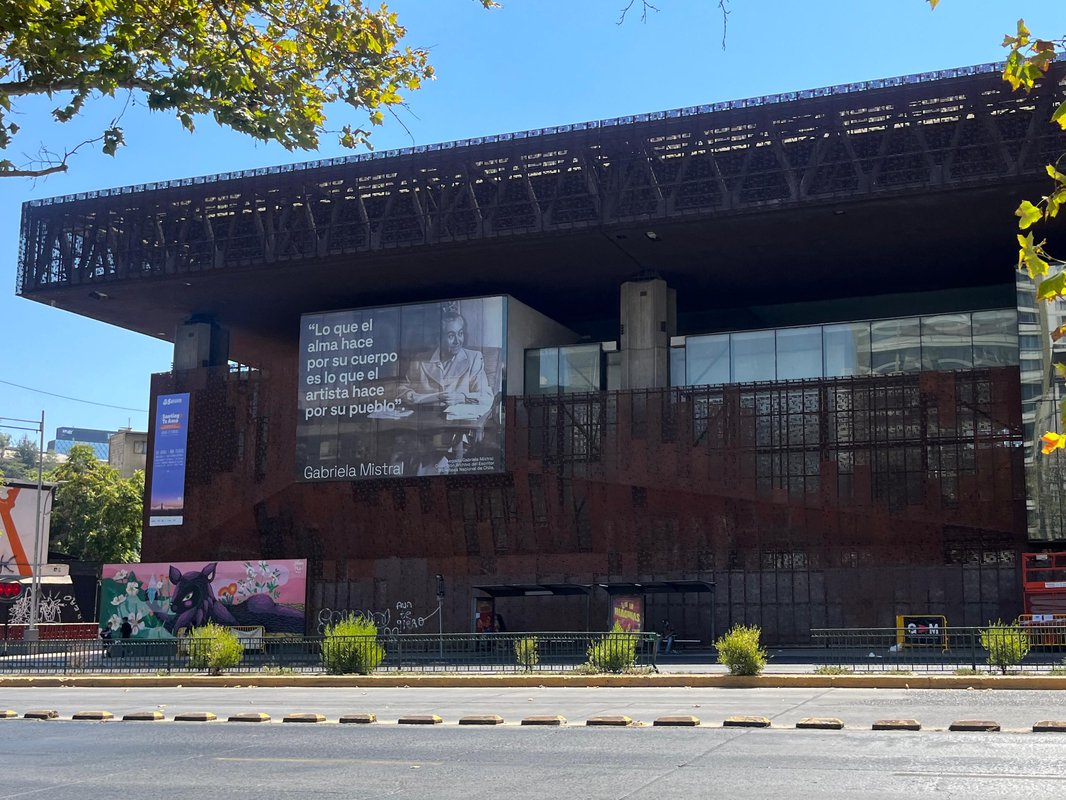
The figure and thoughts of Gabriela Mistral today reemerge imposingly on the façade of GAM after the cultural center that bears her name installed two new gigantographs of one of Chile's main creators and thinkers on its front.
With ideas about culture and diversity, the images measuring six meters each arrive to replace the one that existed since 2015 in one of the windows overlooking the Alameda, just in the year in which the 80 years of his Nobel Prize in Literature and his first National Day are commemorated, to be celebrated on April 7.
"As an institution we wanted to give special emphasis to the figure of Gabriela Mistral, our inspiration and to whom we owe our name as a cultural center. In particular this year, one of the actions designed to achieve this objective and highlight her legacy was the renewal of the façade with images and thoughts that show Gabriela in another facet, not only as the poet and educator, but as the democrat, the thinker, the great intellectual of the 20th century who ended up generating a universal impact to this day," comments the action. Director of GAM Communications, Carolina Díaz Soler.
“In particular this year, one of the actions designed to achieve this objective and highlight her legacy was the renovation of the façade with images and thoughts that show Gabriela in another facet, not only as the poet and educator, but as the democrat, the thinker, the great intellectual of the 20th century who ended up generating a universal impact to this day.”
— Carolina Díaz Soler, director of GAM Communications.
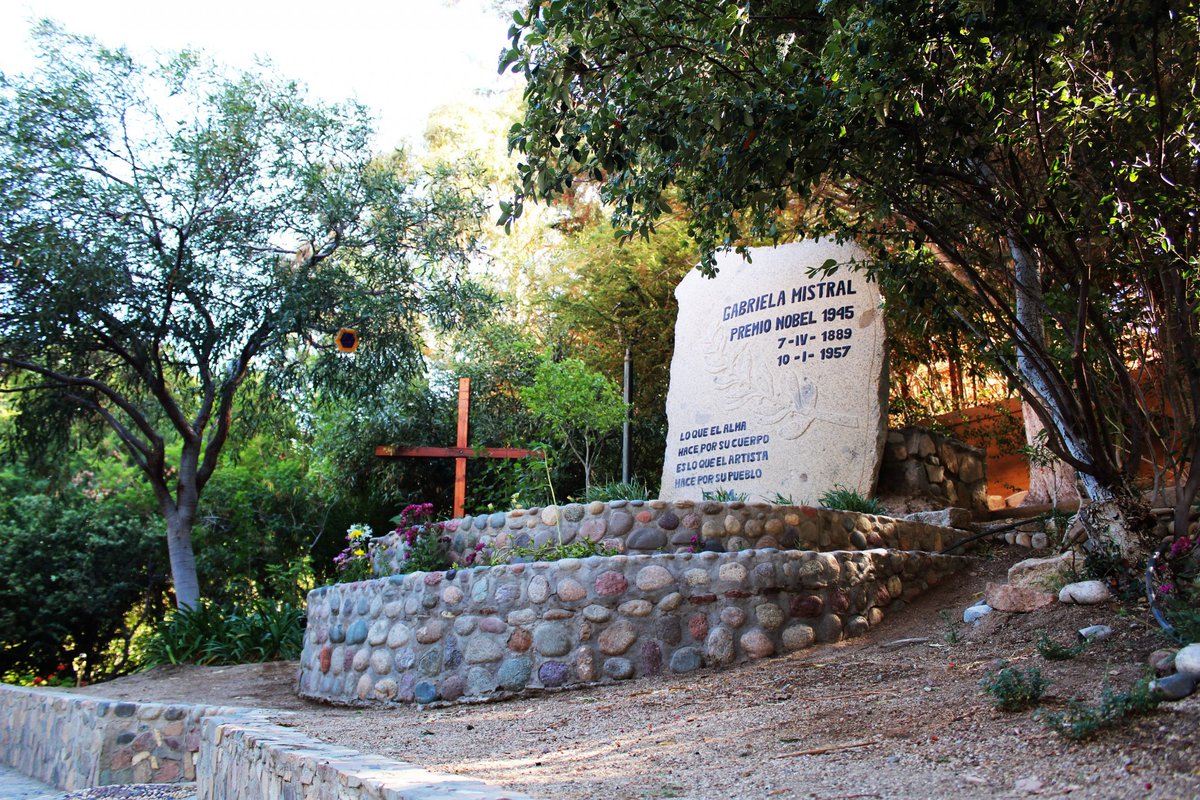
The first image belongs to the collection of the National Library, taken in Santa Barbara, California in 1948. Below the photograph, located in the west window of the building, it reads “What the soul does for its body is what the artist does for its people”, a phrase transmitted orally by Mistral herself to the artist Laura Rodig. The prayer transcended time, thanks to the fact that the sculptor remembered it and wrote in a telegram sent to Mistral to congratulate her on the Nobel Prize in Literature, in November 1945. Furthermore, at the initiative of Rodig herself, the sentence was carved on the tombstone of Montegrande de Gabriela, located in the Coquimbo region.
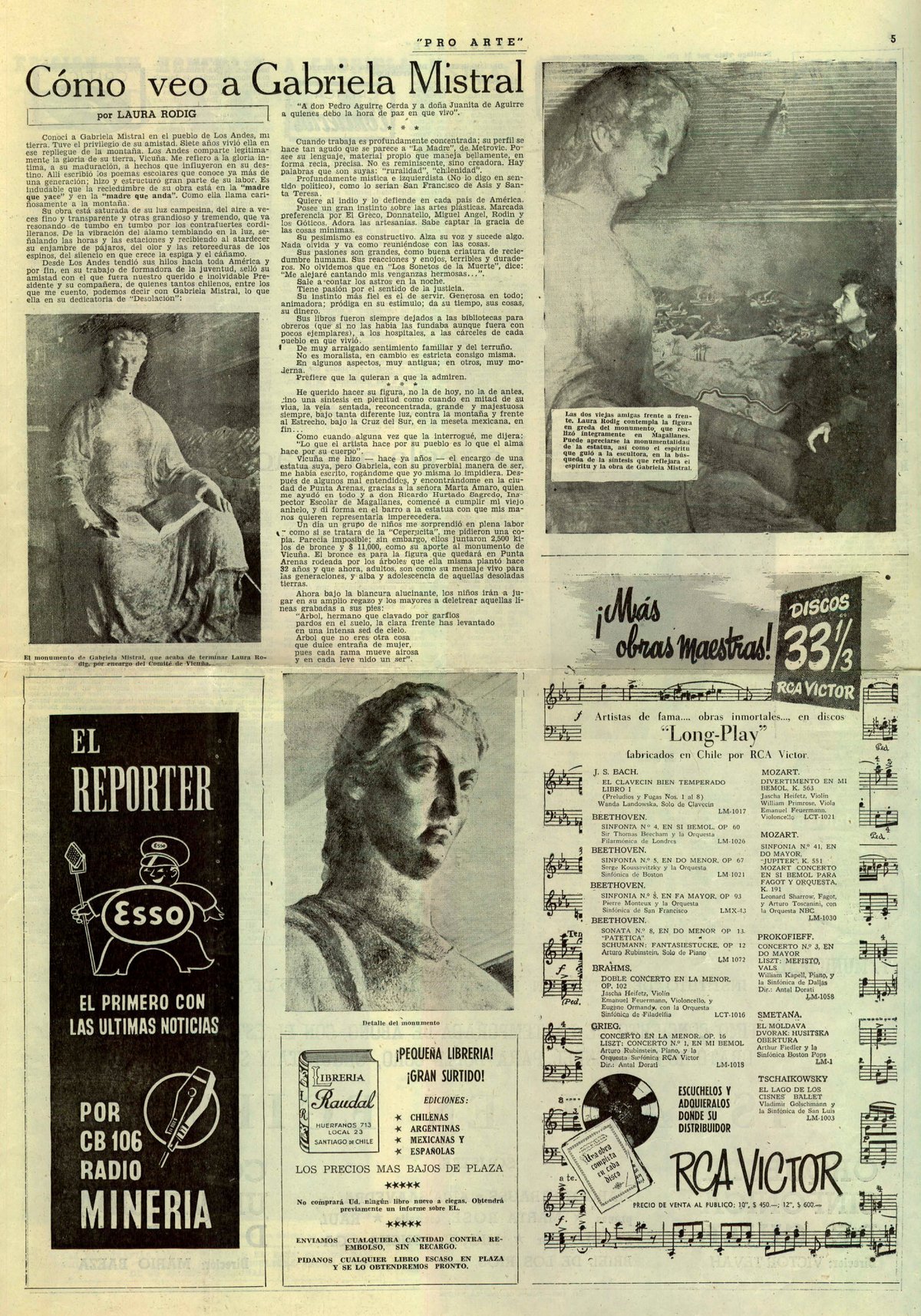
Years later, the sculptor revived this Mistralian thought in the article written and signed by her in the magazine "Pro Arte" of La Nación, in August 1951, on the occasion of a monumental clay sculpture that she made of Gabriela on behalf of the Vicuña Committee:
“I wanted to make her figure, not the one of today, not the one of before, but a synthesis in fullness as when in the middle of her life, I saw her sitting, refocused, always great and majestic...Like when I once questioned her, she told me: "what the artist does for his people is what the soul does for his body," the artist published.
© Chilean Memory
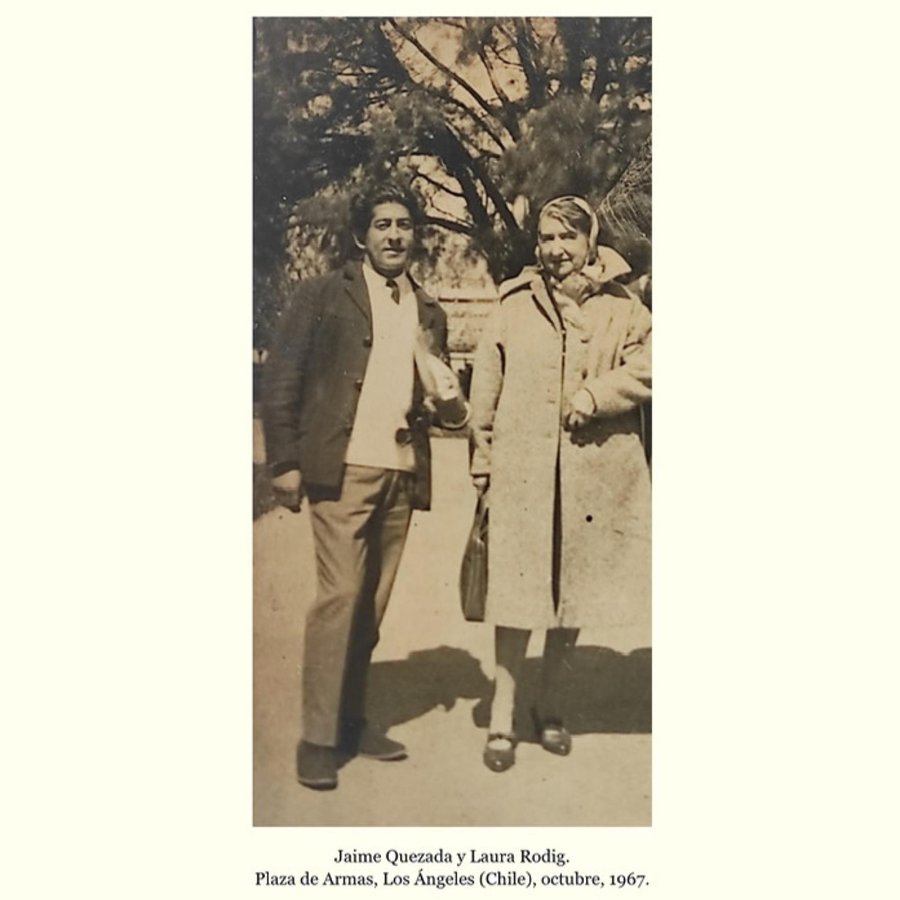
For the poet, essayist, literary critic and specialist in Mistral, Jaime Quezada, "the (oral) phrase is from Gabriela Mistral herself and collected by Laura Rodig in her permanent conversations they had about art and the artist's work or mission. Laura had the nobility to keep in her memory this noble phrase as well, and forever, which today is carved by the initiative, action and work of Rodig herself, on the tombstone of Montegrande. Gabriela Mistral is its author and Laura Rodig its faithful curator."
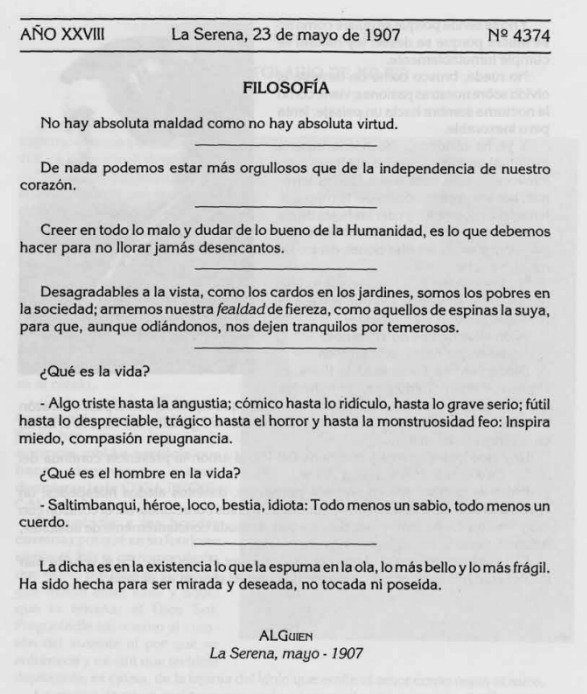
The second image that pays homage to Mistral on the façade of GAM (building B, east window) shows her next to Doris Dana and also belongs to the collection of the National Library. It was taken in Rapallo, Italy in 1951 or 1952. The phrase on the crown says: “We can be prouder of nothing than the independence of our hearts.”
Mistral herself wrote it in the newspaper El Coquimbo in 1907, under the pseudonym "Somebody."
"With this celebration, GAM reaffirms its commitment to memory and art. We will have many activities this year around the poet in our rooms and squares. And it seemed essential to us that our building was part of this manifesto.The image of Mistral will now crown the main avenue of Santiago to remind us of the importance of culture and respect for love and diversity", concludes Díaz.